Why Do Some Restaurant Stocks Stay Strong When Everything Else Falls Apart?
When the economy slows, many investors panic because consumer spending becomes unpredictable. People cut vacations, delay big purchases, and rethink monthly budgets. Yet one part of daily life rarely disappears: eating out. Even when money is tight, families still grab quick meals, rely on drive‑thru options, or choose low‑cost comfort foods.
But here’s the puzzle: some restaurant stocks rise during recessions while others fall hard, even when they serve similar food at similar prices. The reason isn’t obvious at first. The answer becomes clear only after looking at how certain business models behave under stress. We’ll return to this problem at the end of the article.
Why Do Certain Restaurant Stocks Outperform When Budgets Shrink?
Restaurant stocks don’t all react the same way during a downturn. Some chains stay busy. Others lose traffic fast. Understanding why helps investors avoid weak picks and focus on companies with real staying power.
How Do Spending Habits Shift When Money Gets Tight?
When budgets shrink, people look for value. Quick‑service restaurants (QSRs) benefit because they offer low prices and predictable meals. Families trade down from casual dining to fast food, while high‑end restaurants feel the biggest drop because expensive meals are easy to cut.
What Makes a Business Model Recession‑Resistant?
Chains with a franchise‑heavy structure often handle recessions better because franchisees carry most operating costs. This protects the parent company and keeps revenue flowing. Digital ordering also plays a major role. Brands with strong mobile apps and delivery systems maintain sales even when foot traffic slows.
Why Do Cash Flow and Debt Levels Matter So Much?
Companies with low debt and strong free cash flow can survive long slowdowns. They can pay suppliers, support franchisees, and maintain dividends. Investors often reward this stability because it signals long‑term strength.
What Traits Make a Restaurant Stock Strong in a Downturn?
Several features show up again and again in recession‑proof restaurant stocks. Affordable menus help keep customer traffic steady. Large brand presence builds trust and familiarity. Digital ordering systems create reliable demand through delivery and pickup. Revenue diversity, such as franchising or retail products, spreads risk across different income streams. And defensive market positioning gives QSR chains an advantage over casual and fine dining.
| Feature |
Why It Helps |
| Low Prices |
Keeps customer traffic steady |
| Franchise Model |
Reduces corporate risk |
| Strong Cash Flow |
Supports operations and dividends |
| Global Reach |
Spreads economic risk |
| Digital Sales |
Keeps demand stable through delivery |
Which Value‑Focused Restaurant Stocks Hold Up Best?
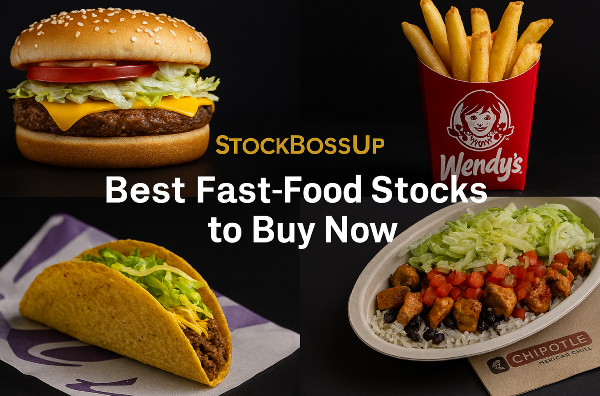
Value‑driven chains often shine during recessions because they offer low prices and fast service. One little‑known fact: McDonald’s sells more than 75 burgers every second worldwide, showing how steady its demand remains even in tough times.
McDonald’s (MCD)
McDonald’s has global scale, a mostly franchised model, and dependable dividends. Its brand power makes it one of the most stable restaurant stocks in any economy.
Yum! Brands (YUM)
Yum! Brands owns KFC, Taco Bell, and Pizza Hut. Its mix of global brands helps balance performance across regions.
Restaurant Brands International (QSR)
QSR owns Burger King, Tim Hortons, and Popeyes. Its franchise system protects cash flow and reduces corporate risk.
Wendy’s (WEN)
Wendy’s benefits from steady sales and a strong value menu. Its digital ordering growth also supports demand.
Jack in the Box (JACK)
Jack in the Box attracts customers with affordable meals and late‑night hours.
Are Fast‑Casual Chains Still Strong When the Economy Slows?
Fast‑casual restaurants offer better ingredients at moderate prices, making them appealing to customers who want quality without paying full restaurant prices. These brands often hold up well because they strike a balance between affordability and experience.
| Company |
Edge During Recession |
| Chipotle (CMG) |
Reliable digital growth |
| Wingstop (WING) |
Asset‑light model |
| Shake Shack (SHAK) |
Strong brand identity |
| Sweetgreen (SG) |
High tech adoption |
| Portillo’s (PTLO) |
Unique menu appeal |
Why Do Coffee and Beverage Chains Stay Busy in Hard Times?
Coffee and beverage chains often hold up well because they sell low‑cost daily habits. People may skip big meals out, but they still grab a morning drink. Another interesting fact: Starbucks once closed every U.S. store for a full evening to retrain staff, showing its commitment to consistency even during uncertain times.
| Company |
Ticker |
Key Point |
| Starbucks |
SBUX |
Benefits from global scale and strong loyalty programs |
| Dutch Bros |
BROS |
Appeals to younger customers and continues to expand quickly |
| Dunkin’ |
Private |
Remains a major force in the coffee market |
| Coca‑Cola |
KO |
Gains indirect restaurant exposure through beverage sales |
Why Do Pizza Chains Often Outperform During Recessions?
Pizza chains thrive during recessions because delivery demand rises. Families choose low‑cost meals that feed multiple people, and pizza fits that need perfectly.
| Company |
Ticker |
Key Point |
| Domino’s Pizza |
DPZ |
Leads in digital ordering and fast delivery |
| Papa John’s |
PZZA |
Maintains steady same‑store sales |
| Little Caesars |
Private |
Major competitor with strong value pricing |
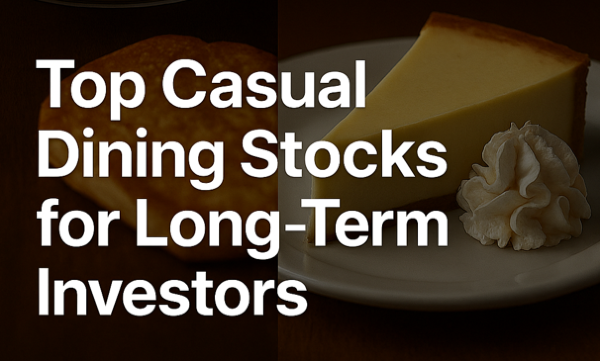
Can Casual Dining Stocks Still Succeed When Spending Drops?
Casual dining is more sensitive to recessions, but some chains still perform well due to strong loyalty and value‑driven menus. Brands that offer consistent quality and family‑friendly pricing tend to hold up better than others.
| Company |
Strength |
| Darden (DRI) |
Diversified brands |
| Texas Roadhouse (TXRH) |
High loyalty |
| Brinker (EAT) |
Value‑driven menu |
| Bloomin’ Brands (BLMN) |
Strong steakhouse appeal |
| Cracker Barrel (CBRL) |
Niche customer base |
Do Franchise Operators Offer Extra Stability?
Franchise operators spread risk across multiple brands, which makes them appealing during recessions. Companies that manage several well‑known chains can balance performance across different customer segments.
| Company |
Ticker |
Key Point |
| FAT Brands |
FAT |
Owns Fatburger, Johnny Rockets, and other chains |
| Dine Brands Global |
DIN |
Operates Applebee’s and IHOP |
| Arcos Dorados |
ARCO |
Largest McDonald's franchisee in Latin America |
| Carrols Restaurant Group |
TAST |
Major Burger King franchisee in the U.S. |
Are There Non‑Traditional Restaurant Stocks Worth Considering?
Indirect restaurant plays can help diversify a portfolio. These companies support the restaurant industry rather than operate their own chains.
| Company |
Ticker |
Key Point |
| Sysco |
SYY |
Supplies food to restaurants across the country |
| US Foods |
USFD |
Major foodservice distributor |
| DoorDash |
DASH |
Delivery demand often rises during recessions as families stay home |
What Risks Should Investors Watch For?
Restaurant investors still face several challenges. Higher labor costs can squeeze margins. Food inflation raises ingredient prices. Weak consumer income reduces discretionary spending. Supply chain issues can disrupt operations. Franchisees may face financial stress. And companies with high debt may struggle to refinance during downturns.
How Can Investors Build a Recession‑Resistant Portfolio?
A strong mix includes QSR chains for stability, fast‑casual brands for growth, pizza companies for delivery strength, and beverage stocks for daily‑habit demand. Blending U.S. and global companies helps spread risk, and long‑term holding strategies allow investors to ride out short‑term volatility.
What Are Some Example Portfolio Approaches?
A value‑focused portfolio might lean heavily on QSR and dividend‑paying companies. A growth portfolio could emphasize fast‑casual and tech‑driven brands. A dividend portfolio would focus on companies with long payout histories. A balanced portfolio blends value, growth, and beverage brands for a more even risk profile.
So Which Restaurant Stocks Truly Stand Out in a Recession?
Now we return to the puzzle from the introduction. The reason some restaurant stocks outperform isn’t just low prices or brand power. It’s the combination of franchising strength, digital ordering systems, and consistent cash flow. These traits allow certain companies to stay profitable even when customers spend less.
Investors who focus on these features can build a portfolio that stays steady when the economy slows. Restaurant stocks with strong demand, diverse revenue streams, and proven resilience offer a path to long‑term stability—even in the toughest markets.
🚀 Level Up Your Portfolio: Exclusive Restaurant Insights
Ready to dominate the market? Our expert analysis breaks down the most lucrative opportunities in the dining sector. Explore our curated investment insight below to find your next big winner.
📈 High-Growth & Market Leaders
🛡️ Stability, Margins & Dividends
🌍 Specialized Niches & Global Reach
🏛️ Industry Investment Hubs
Pro Tip: Bookmark our main category hubs to stay ahead of sector rotations and macro trends.








Why Do Some Restaurant Stocks Stay Strong When Everything Else Falls Apart?
When the economy slows, many investors panic because consumer spending becomes unpredictable. People cut vacations, delay big purchases, and rethink monthly budgets. Yet one part of daily life rarely disappears: eating out. Even when money is tight, families still grab quick meals, rely on drive‑thru options, or choose low‑cost comfort foods.
But here’s the puzzle: some restaurant stocks rise during recessions while others fall hard, even when they serve similar food at similar prices. The reason isn’t obvious at first. The answer becomes clear only after looking at how certain business models behave under stress. We’ll return to this problem at the end of the article.
Why Do Certain Restaurant Stocks Outperform When Budgets Shrink?
Restaurant stocks don’t all react the same way during a downturn. Some chains stay busy. Others lose traffic fast. Understanding why helps investors avoid weak picks and focus on companies with real staying power.
How Do Spending Habits Shift When Money Gets Tight?
When budgets shrink, people look for value. Quick‑service restaurants (QSRs) benefit because they offer low prices and predictable meals. Families trade down from casual dining to fast food, while high‑end restaurants feel the biggest drop because expensive meals are easy to cut.
What Makes a Business Model Recession‑Resistant?
Chains with a franchise‑heavy structure often handle recessions better because franchisees carry most operating costs. This protects the parent company and keeps revenue flowing. Digital ordering also plays a major role. Brands with strong mobile apps and delivery systems maintain sales even when foot traffic slows.
Why Do Cash Flow and Debt Levels Matter So Much?
Companies with low debt and strong free cash flow can survive long slowdowns. They can pay suppliers, support franchisees, and maintain dividends. Investors often reward this stability because it signals long‑term strength.
What Traits Make a Restaurant Stock Strong in a Downturn?
Several features show up again and again in recession‑proof restaurant stocks. Affordable menus help keep customer traffic steady. Large brand presence builds trust and familiarity. Digital ordering systems create reliable demand through delivery and pickup. Revenue diversity, such as franchising or retail products, spreads risk across different income streams. And defensive market positioning gives QSR chains an advantage over casual and fine dining.
Which Value‑Focused Restaurant Stocks Hold Up Best?
Value‑driven chains often shine during recessions because they offer low prices and fast service. One little‑known fact: McDonald’s sells more than 75 burgers every second worldwide, showing how steady its demand remains even in tough times.
McDonald’s (MCD)
McDonald’s has global scale, a mostly franchised model, and dependable dividends. Its brand power makes it one of the most stable restaurant stocks in any economy.
Yum! Brands (YUM)
Yum! Brands owns KFC, Taco Bell, and Pizza Hut. Its mix of global brands helps balance performance across regions.
Restaurant Brands International (QSR)
QSR owns Burger King, Tim Hortons, and Popeyes. Its franchise system protects cash flow and reduces corporate risk.
Wendy’s (WEN)
Wendy’s benefits from steady sales and a strong value menu. Its digital ordering growth also supports demand.
Jack in the Box (JACK)
Jack in the Box attracts customers with affordable meals and late‑night hours.
Are Fast‑Casual Chains Still Strong When the Economy Slows?
Fast‑casual restaurants offer better ingredients at moderate prices, making them appealing to customers who want quality without paying full restaurant prices. These brands often hold up well because they strike a balance between affordability and experience.
Why Do Coffee and Beverage Chains Stay Busy in Hard Times?
Coffee and beverage chains often hold up well because they sell low‑cost daily habits. People may skip big meals out, but they still grab a morning drink. Another interesting fact: Starbucks once closed every U.S. store for a full evening to retrain staff, showing its commitment to consistency even during uncertain times.
Why Do Pizza Chains Often Outperform During Recessions?
Pizza chains thrive during recessions because delivery demand rises. Families choose low‑cost meals that feed multiple people, and pizza fits that need perfectly.
Can Casual Dining Stocks Still Succeed When Spending Drops?
Casual dining is more sensitive to recessions, but some chains still perform well due to strong loyalty and value‑driven menus. Brands that offer consistent quality and family‑friendly pricing tend to hold up better than others.
Do Franchise Operators Offer Extra Stability?
Franchise operators spread risk across multiple brands, which makes them appealing during recessions. Companies that manage several well‑known chains can balance performance across different customer segments.
Are There Non‑Traditional Restaurant Stocks Worth Considering?
Indirect restaurant plays can help diversify a portfolio. These companies support the restaurant industry rather than operate their own chains.
What Risks Should Investors Watch For?
Restaurant investors still face several challenges. Higher labor costs can squeeze margins. Food inflation raises ingredient prices. Weak consumer income reduces discretionary spending. Supply chain issues can disrupt operations. Franchisees may face financial stress. And companies with high debt may struggle to refinance during downturns.
How Can Investors Build a Recession‑Resistant Portfolio?
A strong mix includes QSR chains for stability, fast‑casual brands for growth, pizza companies for delivery strength, and beverage stocks for daily‑habit demand. Blending U.S. and global companies helps spread risk, and long‑term holding strategies allow investors to ride out short‑term volatility.
What Are Some Example Portfolio Approaches?
A value‑focused portfolio might lean heavily on QSR and dividend‑paying companies. A growth portfolio could emphasize fast‑casual and tech‑driven brands. A dividend portfolio would focus on companies with long payout histories. A balanced portfolio blends value, growth, and beverage brands for a more even risk profile.
So Which Restaurant Stocks Truly Stand Out in a Recession?
Now we return to the puzzle from the introduction. The reason some restaurant stocks outperform isn’t just low prices or brand power. It’s the combination of franchising strength, digital ordering systems, and consistent cash flow. These traits allow certain companies to stay profitable even when customers spend less.
Investors who focus on these features can build a portfolio that stays steady when the economy slows. Restaurant stocks with strong demand, diverse revenue streams, and proven resilience offer a path to long‑term stability—even in the toughest markets.
🚀 Level Up Your Portfolio: Exclusive Restaurant Insights
Ready to dominate the market? Our expert analysis breaks down the most lucrative opportunities in the dining sector. Explore our curated investment insight below to find your next big winner.
📈 High-Growth & Market Leaders
🛡️ Stability, Margins & Dividends
🌍 Specialized Niches & Global Reach
🏛️ Industry Investment Hubs