🔑 Key Takeaways: Restaurant Industry Outlook (2025–2026)
🍽️ **Economic Pressures Are Reshaping Operations**
Rising food, wage, and real estate costs will continue to squeeze margins. Restaurants that monitor commodity trends and adopt smaller footprints will stay more resilient.
🤖 **Technology and Automation Drive Efficiency**
AI tools, robotics, and smart inventory systems are transforming restaurant management. Automation helps control labor costs, improve consistency, and enhance customer experiences.
🚗 **Off‑Premise Dining and Hybrid Models Expand Reach**
Delivery, drive‑thru, and takeout‑only kitchens are fueling growth. First‑party delivery and AI‑powered ordering systems will improve speed and profitability.
🌱 **Sustainability and Local Engagement Build Loyalty**
Investments in energy efficiency, compostable packaging, and community‑based programs strengthen brand trust. Eco‑friendly practices are becoming a competitive advantage.
Restaurant Industry Outlook (2025–2026)
Restaurants are still dealing with rapid changes that started in the early 2020s. Customer expectations are different, and economic pressures continue to shape the industry. Operators who adjust quickly will be in a better position to grow.
Several forces will influence the restaurant space. These include the cost of food, changes in wages, supply chain conditions, and technology trends. This article examines all major areas that will matter most over the next two years.
Restaurants that watch these trends and adapt their strategies will be more competitive. Learning where the industry is moving gives leaders a better chance to plan for long‑term success.
Macroeconomic Factors Shaping the Industry
Inflation will remain a concern in 2025 and 2026. Food costs are expected to rise slowly but continue to impact the bottom line. Operators who watch commodity prices closely will be more prepared.
Wage growth will continue as states update minimum wage laws. Restaurant labor will stay expensive compared to past decades. More companies will invest in labor‑saving tools to offset these rising costs.
Real estate will be a pressure point. Leasing costs may rise in major cities, but many suburban areas will offer more favorable rates. Some brands may shift to smaller footprints to stay profitable.
Interest rates will affect expansions and remodels. Access to capital will be tighter, making it harder for new owners to open stores. Companies with strong financials will still have opportunities to grow.
Supply chains are becoming more stable, but long-distance imports may remain unpredictable. Ingredients from overseas can face delays or price swings due to global events.
| Economic Factor |
Expected Trend |
Impact on Restaurants |
| Food Costs |
Moderate increases |
Higher menu prices |
| Wage Growth |
Steady increases |
Labor budgeting pressure |
| Interest Rates |
Gradual declines |
More financing options |
| Real Estate Costs |
Slight rise |
Smaller footprints |
| Supply Chain |
Improving stability |
More predictable ordering |
Consumer Behavior Trends
Customers want value, but they also want a good experience. Many people now choose restaurants that offer both convenience and quality. This shift pushes brands to improve service while keeping prices fair.
Healthy eating is growing. More diners want fresh ingredients and clear information about where their food comes from. Restaurants that offer clean-label menus will attract these customers.
Plant‑forward eating is not slowing down. Many consumers eat meat but enjoy plant-based meals once or twice a week. Restaurants that add flexible menu options can appeal to a wider group.
Zero‑proof beverages are becoming more popular. Many adults prefer non-alcoholic choices that still feel special. Bars and restaurants that expand their offerings may see higher check averages.
Local and community-focused brands are gaining trust. People want to support businesses that feel authentic and contribute to their neighborhoods.
Some restaurants are now using light and sound adjustments to influence how customers perceive flavor.
Technology Transformations
AI is moving quickly into restaurant operations. Predictive analytics can help owners plan staffing levels and inventory needs. This helps reduce waste and control labor.
Self-service kiosks are appearing more often in quick-service restaurants. Customers like the speed and accuracy, and operators save on labor.
Robotic fryers and robotic runners are entering more kitchens. These machines handle repetitive tasks that are hard to staff. This also improves consistency.
Mobile apps are becoming smarter. They track behavior patterns so brands can offer personalized deals. This helps drive repeat visits.
Smart inventory systems are reducing food waste. They track product levels in real time and suggest reorder points. This helps managers avoid guessing, which saves money.
It is interesting that some restaurants in Asia already use AI systems that can predict customer orders with over 80% accuracy based on weather, time, and past behavior.
Off‑Premise and Delivery Innovations
Delivery will continue to grow, but the economics remain complex. Third-party fees reduce profit margins, so many brands are building their own delivery systems.
First-party delivery will grow as restaurants aim to keep more of each sale. Some brands will run small delivery fleets or partner with local drivers.
Drive-thru modernization is happening across the quick-service segment. AI ordering assistants, dual lanes, and better traffic flow tools are improving speed and accuracy.
Curbside pickup remains popular because it is convenient. Stores that invest in better signage or digital pickup boards will improve customer satisfaction.
Hybrid models are emerging. Some full-service restaurants are launching takeout-only side brands that operate with fewer staff members.
| Off‑Premise Area |
Growth Level |
Notes |
| Delivery |
High |
First‑party rising |
| Drive‑Thru |
High |
AI‑driven orders |
| Curbside |
Medium |
Strong for families |
| Takeout‑Only Kitchens |
High |
Lower labor |
| Third‑Party Apps |
Stable |
Fees remain an issue |
Operational Strategies for 2025–2026
Labor optimization is critical. Restaurants will use scheduling tools that predict busy times more accurately. This helps avoid overstaffing or understaffing.
Menu engineering is another key area. Operators will analyze which items drive profit and remove low performers. Smaller menus make kitchens more efficient.
Shrinkage, such as food spoilage and over-portioning, hurts margins. More brands will track portions closely to reduce waste.
Dynamic pricing may appear in more restaurants. Prices can adjust for peak hours or slower periods. This helps manage demand.
Vendor partnerships will become more important. Consistent suppliers help reduce risk and maintain quality.
Corporate and Chain Restaurant Trends
Quick-service restaurants (QSRs) will keep expanding. They are popular due to their speed, value, and convenience. Brands like McDonald’s (MCD) and Chipotle (CMG) will continue upgrading their digital systems.
Fast-casual brands will focus on premium add-ons and modular kitchens that can change layouts quickly. This gives flexibility during rush periods.
Full-service restaurants will adopt smaller dining rooms. Many guests now choose off-premise channels, so these brands need fewer seats.
Franchising will rise in categories like chicken, healthy bowls, and specialty drinks. More entrepreneurs are entering these spaces.
Mergers and acquisitions may increase as private equity funds target profitable chains. Public companies such as Starbucks (SBUX) may also invest in new concepts or technology.
Sustainability and ESG Priorities
Carbon tracking tools will become more common. Many companies want to understand their impact and report progress.
Energy-efficient kitchen equipment can reduce utility bills. This includes induction cookers and high-efficiency refrigeration.
Sustainable packaging will continue to grow as laws change. Compostable and reusable materials will become more affordable.
Water conservation is rising in importance. New dishwashers and faucet systems help reduce water usage.
Many diners care about sustainability. Restaurants that show clear efforts in this area can build trust and loyalty.
| Investment Area |
Benefit |
Adoption Level |
| Energy Efficiency |
Lower utilities |
Rising |
| Compostable Packaging |
Eco‑friendly image |
High |
| Water Reduction Tools |
Lower costs |
Medium |
| Carbon Tracking |
Reporting support |
Growing |
| Waste Reduction Tech |
Less shrinkage |
Medium |
Marketing and Brand Strategy Trends
Micro-influencers are becoming a major marketing tool. They create content that feels authentic and local. Customers respond to this type of promotion more than large celebrity campaigns.
AI-generated marketing content helps brands create ads faster. It also reduces marketing costs.
Loyalty programs are evolving into gamified systems. Customers earn points, unlock badges, and get new rewards. This increases engagement and repeat visits.
Limited-time offers (LTOs) will remain effective. They generate excitement and bring in traffic during slower periods.
Brand storytelling matters more than ever. Companies that share their values attract younger consumers.
Regulatory and Compliance Outlook
Minimum wage increases will affect many states. Operators must plan ahead and adjust staffing models to stay profitable.
Health and safety standards may shift as new best practices develop. Cleanliness will remain a major priority.
Data privacy laws will impact loyalty apps. Brands must protect customer information.
Environmental rules may limit certain types of packaging. Restaurants will need to switch to approved materials.
Alcohol service rules may also change as more states adopt flexible licensing.
International and Global Trends
| Region |
Demand Level |
Notes |
| Asia |
Very High |
Fast‑casual rising |
| Middle East |
High |
QSR expansions |
| Europe |
Moderate |
Tourism impact |
| North America |
Moderate |
Value focus |
| Latin America |
Growing |
New franchise interest |
American QSR brands continue to expand globally. Many chains are growing fast in Asia and the Middle East.
Asian fast-casual concepts are entering Western markets. Dishes like ramen, katsu, and Korean barbecue bowls are gaining traction.
Cross-border flavor blending is becoming more popular. Many restaurants now mix regional cuisines to create new items.
Global ingredient sourcing may shift toward regional suppliers. This helps reduce risk and transport time.
Tourism will rise in many countries. This will increase demand for restaurants near major attractions.
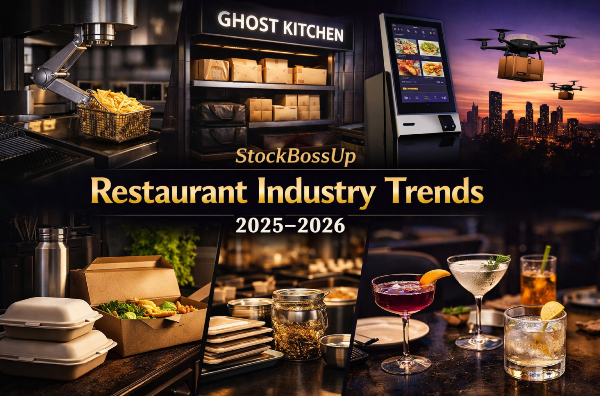
Restaurant Trends & Innovations Shaping 2025–2026
AI, Automation & Labor‑Saving Technology
- AI‑assisted drive‑thru systems that speed up ordering
- Robotic fryers and automated cooklines that reduce labor needs
- Smart digital menus that update pricing and promotions in real time
- Automated bar systems that improve consistency and reduce waste
- All‑electric kitchens designed for efficiency and lower emissions
Menu Innovation & Guest Experience
- Zero‑proof cocktail menus gaining mainstream traction
- Hyper‑local ingredient sourcing to boost freshness and storytelling
- Dynamic menu pricing based on demand and food costs
- AR or VR dining experiences for immersive brand engagement
- Comfort‑food micro‑chains built around nostalgia and simplicity
Off‑Premise & Digital Growth
- Modular ghost kitchens that expand delivery reach
- First‑party delivery fleets reducing reliance on third‑party apps
- Subscription meal passes that drive recurring revenue
- App‑only secret menus that reward loyal customers
- Drone delivery tests in select markets
Sustainability & Community Engagement
- Reusable container programs to cut packaging waste
- Community‑based memberships that deepen local loyalty
- Allergy‑friendly kitchen zones for safer dining
- Waste‑reduction and carbon‑tracking tools
- Restaurant‑branded grocery products entering retail shelves
New Formats & Expansion Models
- Compact urban restaurant units optimized for high‑density areas
- Seasonal pop‑up restaurants for low‑risk market testing
- Modular layouts that allow rapid expansion or relocation
Read More: The Top Restaurant Stocks of 2026
Opportunities for 2025–2026
The most promising concepts include healthier fast-casual brands, specialty beverage shops, and ethnic fusion restaurants. These categories continue to grow even when the economy slows.
Strong markets include suburban neighborhoods, growing Sun Belt cities, and college towns. These areas show consistent demand.
High-demand menu categories include bowls, handheld items, and shareable snacks.
Tech investments that offer strong returns include AI scheduling tools, self-service kiosks, and inventory systems.
Here are rewritten versions of both sections — clearer, more engaging, and structured for stronger SEO performance while keeping the tone tight and skimmable.
Challenges and Risks (2025–2026)
Restaurants will continue to face margin pressure as food, labor, and operating expenses rise faster than many brands can adjust prices. Operators that fail to manage costs strategically may see profitability shrink.
Labor shortages will persist in several regions, making it harder to hire and retain reliable staff. Brands that lack strong training and retention programs will feel this pain the most.
Delivery profitability remains a challenge. High third‑party fees, complex logistics, and customer expectations for fast service make it difficult to maintain healthy margins.
Competition in major metro areas will stay intense. With so many concepts fighting for the same customers, brand differentiation becomes essential for survival.
Increasing regulatory requirements—from labor laws to sustainability mandates—will demand more time, documentation, and operational discipline.
Strategic Recommendations for Operators
Prioritize labor‑saving tools and automation that reduce workload without hurting the guest experience. Even small operational efficiencies can create meaningful long‑term savings.
Simplify the menu to focus on items that are fast, consistent, and profitable. Streamlined production helps teams perform better during peak hours and reduces errors.
Invest in strong training and retention programs. Well‑prepared teams deliver better service, stay longer, and lower overall turnover costs.
Review pricing on a quarterly cadence. Adjust menu items based on demand patterns, food cost changes, and competitive benchmarks to protect margins.
Strengthen vendor and supplier relationships. Reliable partners help stabilize costs, reduce risk, and ensure consistent product availability.
Conclusion
The restaurant industry will change quickly over the next two years. Operators who embrace technology, focus on efficiency, and listen to their customers will have the best results. While challenges remain, there are many opportunities for growth.
Restaurants that stay flexible and forward‑thinking will be in a strong position beyond 2026.
🚀 Expand Your Edge: Elite Restaurant & Consumer Insights
Ready to dominate the sector? Our Investor Intelligence Hub is designed to help you navigate the complex world of restaurant equities with precision. From deep-dive fundamental analysis to macroeconomic strategy, explore our curated silos below to find your next big winner.
🍽️ Sector Fundamentals & Top Picks
📊 Deep-Dive Financial Analysis
🧠 Strategic Operations & Economics
🌍 Macro, Risk & Global Trends
💡 Investor Psychology & Behavioral Trends
🔍 Advanced Intelligence










🔑 Key Takeaways: Restaurant Industry Outlook (2025–2026)
🍽️ **Economic Pressures Are Reshaping Operations**
Rising food, wage, and real estate costs will continue to squeeze margins. Restaurants that monitor commodity trends and adopt smaller footprints will stay more resilient.🤖 **Technology and Automation Drive Efficiency**
AI tools, robotics, and smart inventory systems are transforming restaurant management. Automation helps control labor costs, improve consistency, and enhance customer experiences.🚗 **Off‑Premise Dining and Hybrid Models Expand Reach**
Delivery, drive‑thru, and takeout‑only kitchens are fueling growth. First‑party delivery and AI‑powered ordering systems will improve speed and profitability.🌱 **Sustainability and Local Engagement Build Loyalty**
Investments in energy efficiency, compostable packaging, and community‑based programs strengthen brand trust. Eco‑friendly practices are becoming a competitive advantage.Restaurant Industry Outlook (2025–2026)
Restaurants are still dealing with rapid changes that started in the early 2020s. Customer expectations are different, and economic pressures continue to shape the industry. Operators who adjust quickly will be in a better position to grow.
Several forces will influence the restaurant space. These include the cost of food, changes in wages, supply chain conditions, and technology trends. This article examines all major areas that will matter most over the next two years.
Restaurants that watch these trends and adapt their strategies will be more competitive. Learning where the industry is moving gives leaders a better chance to plan for long‑term success.
Macroeconomic Factors Shaping the Industry
Inflation will remain a concern in 2025 and 2026. Food costs are expected to rise slowly but continue to impact the bottom line. Operators who watch commodity prices closely will be more prepared.
Wage growth will continue as states update minimum wage laws. Restaurant labor will stay expensive compared to past decades. More companies will invest in labor‑saving tools to offset these rising costs.
Real estate will be a pressure point. Leasing costs may rise in major cities, but many suburban areas will offer more favorable rates. Some brands may shift to smaller footprints to stay profitable.
Interest rates will affect expansions and remodels. Access to capital will be tighter, making it harder for new owners to open stores. Companies with strong financials will still have opportunities to grow.
Supply chains are becoming more stable, but long-distance imports may remain unpredictable. Ingredients from overseas can face delays or price swings due to global events.
Consumer Behavior Trends
Customers want value, but they also want a good experience. Many people now choose restaurants that offer both convenience and quality. This shift pushes brands to improve service while keeping prices fair.
Healthy eating is growing. More diners want fresh ingredients and clear information about where their food comes from. Restaurants that offer clean-label menus will attract these customers.
Plant‑forward eating is not slowing down. Many consumers eat meat but enjoy plant-based meals once or twice a week. Restaurants that add flexible menu options can appeal to a wider group.
Zero‑proof beverages are becoming more popular. Many adults prefer non-alcoholic choices that still feel special. Bars and restaurants that expand their offerings may see higher check averages.
Local and community-focused brands are gaining trust. People want to support businesses that feel authentic and contribute to their neighborhoods.
Some restaurants are now using light and sound adjustments to influence how customers perceive flavor.
Technology Transformations
AI is moving quickly into restaurant operations. Predictive analytics can help owners plan staffing levels and inventory needs. This helps reduce waste and control labor.
Self-service kiosks are appearing more often in quick-service restaurants. Customers like the speed and accuracy, and operators save on labor.
Robotic fryers and robotic runners are entering more kitchens. These machines handle repetitive tasks that are hard to staff. This also improves consistency.
Mobile apps are becoming smarter. They track behavior patterns so brands can offer personalized deals. This helps drive repeat visits.
Smart inventory systems are reducing food waste. They track product levels in real time and suggest reorder points. This helps managers avoid guessing, which saves money.
It is interesting that some restaurants in Asia already use AI systems that can predict customer orders with over 80% accuracy based on weather, time, and past behavior.
Off‑Premise and Delivery Innovations
Delivery will continue to grow, but the economics remain complex. Third-party fees reduce profit margins, so many brands are building their own delivery systems.
First-party delivery will grow as restaurants aim to keep more of each sale. Some brands will run small delivery fleets or partner with local drivers.
Drive-thru modernization is happening across the quick-service segment. AI ordering assistants, dual lanes, and better traffic flow tools are improving speed and accuracy.
Curbside pickup remains popular because it is convenient. Stores that invest in better signage or digital pickup boards will improve customer satisfaction.
Hybrid models are emerging. Some full-service restaurants are launching takeout-only side brands that operate with fewer staff members.
Operational Strategies for 2025–2026
Labor optimization is critical. Restaurants will use scheduling tools that predict busy times more accurately. This helps avoid overstaffing or understaffing.
Menu engineering is another key area. Operators will analyze which items drive profit and remove low performers. Smaller menus make kitchens more efficient.
Shrinkage, such as food spoilage and over-portioning, hurts margins. More brands will track portions closely to reduce waste.
Dynamic pricing may appear in more restaurants. Prices can adjust for peak hours or slower periods. This helps manage demand.
Vendor partnerships will become more important. Consistent suppliers help reduce risk and maintain quality.
Corporate and Chain Restaurant Trends
Quick-service restaurants (QSRs) will keep expanding. They are popular due to their speed, value, and convenience. Brands like McDonald’s (MCD) and Chipotle (CMG) will continue upgrading their digital systems.
Fast-casual brands will focus on premium add-ons and modular kitchens that can change layouts quickly. This gives flexibility during rush periods.
Full-service restaurants will adopt smaller dining rooms. Many guests now choose off-premise channels, so these brands need fewer seats.
Franchising will rise in categories like chicken, healthy bowls, and specialty drinks. More entrepreneurs are entering these spaces.
Mergers and acquisitions may increase as private equity funds target profitable chains. Public companies such as Starbucks (SBUX) may also invest in new concepts or technology.
Sustainability and ESG Priorities
Carbon tracking tools will become more common. Many companies want to understand their impact and report progress.
Energy-efficient kitchen equipment can reduce utility bills. This includes induction cookers and high-efficiency refrigeration.
Sustainable packaging will continue to grow as laws change. Compostable and reusable materials will become more affordable.
Water conservation is rising in importance. New dishwashers and faucet systems help reduce water usage.
Many diners care about sustainability. Restaurants that show clear efforts in this area can build trust and loyalty.
Marketing and Brand Strategy Trends
Micro-influencers are becoming a major marketing tool. They create content that feels authentic and local. Customers respond to this type of promotion more than large celebrity campaigns.
AI-generated marketing content helps brands create ads faster. It also reduces marketing costs.
Loyalty programs are evolving into gamified systems. Customers earn points, unlock badges, and get new rewards. This increases engagement and repeat visits.
Limited-time offers (LTOs) will remain effective. They generate excitement and bring in traffic during slower periods.
Brand storytelling matters more than ever. Companies that share their values attract younger consumers.
Regulatory and Compliance Outlook
Minimum wage increases will affect many states. Operators must plan ahead and adjust staffing models to stay profitable.
Health and safety standards may shift as new best practices develop. Cleanliness will remain a major priority.
Data privacy laws will impact loyalty apps. Brands must protect customer information.
Environmental rules may limit certain types of packaging. Restaurants will need to switch to approved materials.
Alcohol service rules may also change as more states adopt flexible licensing.
International and Global Trends
American QSR brands continue to expand globally. Many chains are growing fast in Asia and the Middle East.
Asian fast-casual concepts are entering Western markets. Dishes like ramen, katsu, and Korean barbecue bowls are gaining traction.
Cross-border flavor blending is becoming more popular. Many restaurants now mix regional cuisines to create new items.
Global ingredient sourcing may shift toward regional suppliers. This helps reduce risk and transport time.
Tourism will rise in many countries. This will increase demand for restaurants near major attractions.
Restaurant Trends & Innovations Shaping 2025–2026
AI, Automation & Labor‑Saving Technology
Menu Innovation & Guest Experience
Off‑Premise & Digital Growth
Sustainability & Community Engagement
New Formats & Expansion Models
Opportunities for 2025–2026
The most promising concepts include healthier fast-casual brands, specialty beverage shops, and ethnic fusion restaurants. These categories continue to grow even when the economy slows.
Strong markets include suburban neighborhoods, growing Sun Belt cities, and college towns. These areas show consistent demand.
High-demand menu categories include bowls, handheld items, and shareable snacks.
Tech investments that offer strong returns include AI scheduling tools, self-service kiosks, and inventory systems.
Here are rewritten versions of both sections — clearer, more engaging, and structured for stronger SEO performance while keeping the tone tight and skimmable.
Challenges and Risks (2025–2026)
Restaurants will continue to face margin pressure as food, labor, and operating expenses rise faster than many brands can adjust prices. Operators that fail to manage costs strategically may see profitability shrink.
Labor shortages will persist in several regions, making it harder to hire and retain reliable staff. Brands that lack strong training and retention programs will feel this pain the most.
Delivery profitability remains a challenge. High third‑party fees, complex logistics, and customer expectations for fast service make it difficult to maintain healthy margins.
Competition in major metro areas will stay intense. With so many concepts fighting for the same customers, brand differentiation becomes essential for survival.
Increasing regulatory requirements—from labor laws to sustainability mandates—will demand more time, documentation, and operational discipline.
Strategic Recommendations for Operators
Prioritize labor‑saving tools and automation that reduce workload without hurting the guest experience. Even small operational efficiencies can create meaningful long‑term savings.
Simplify the menu to focus on items that are fast, consistent, and profitable. Streamlined production helps teams perform better during peak hours and reduces errors.
Invest in strong training and retention programs. Well‑prepared teams deliver better service, stay longer, and lower overall turnover costs.
Review pricing on a quarterly cadence. Adjust menu items based on demand patterns, food cost changes, and competitive benchmarks to protect margins.
Strengthen vendor and supplier relationships. Reliable partners help stabilize costs, reduce risk, and ensure consistent product availability.
Conclusion
The restaurant industry will change quickly over the next two years. Operators who embrace technology, focus on efficiency, and listen to their customers will have the best results. While challenges remain, there are many opportunities for growth.
Restaurants that stay flexible and forward‑thinking will be in a strong position beyond 2026.
🚀 Expand Your Edge: Elite Restaurant & Consumer Insights
Ready to dominate the sector? Our Investor Intelligence Hub is designed to help you navigate the complex world of restaurant equities with precision. From deep-dive fundamental analysis to macroeconomic strategy, explore our curated silos below to find your next big winner.
🍽️ Sector Fundamentals & Top Picks
📊 Deep-Dive Financial Analysis
🧠 Strategic Operations & Economics
🌍 Macro, Risk & Global Trends
💡 Investor Psychology & Behavioral Trends
🔍 Advanced Intelligence