The FIFA World Cup is one of the most-watched events on the planet. Billions of people tune in, buy merchandise, travel, and celebrate. Money moves fast during the tournament, and certain companies benefit more than others. But here’s the problem: most investors focus only on the obvious winners. They overlook a deeper pattern that shows up every four years. This pattern can change how you think about global sports events and the companies tied to them.
The solution to that problem becomes clear only after you understand how these companies actually benefit.
Why Do Some Companies Gain More Than Others During the World Cup?
The World Cup creates a surge in spending across food, travel, apparel, entertainment, and technology. But the gains are not evenly spread. Some companies see a direct boost from sponsorships. Others benefit from increased demand for gear, travel, or streaming. A few profit from something less obvious: data.
To understand the full picture, you need to look at the tournament the same way global brands do. They don’t just see a sports event. They see a worldwide economic engine.
How Do Sponsors Turn the World Cup Into a Revenue Machine?
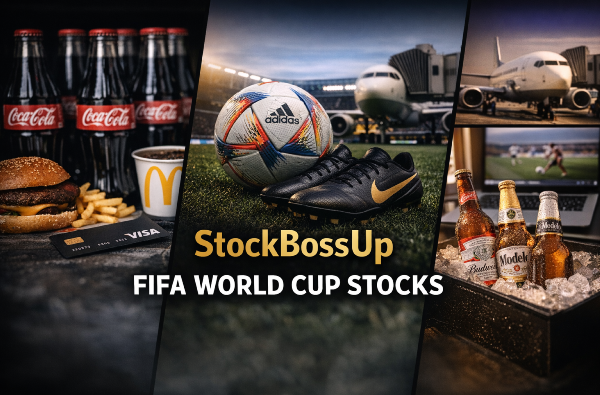
Official sponsors get the most visibility. Their logos appear on screens, jerseys, and stadium banners. This exposure drives brand loyalty and sales. Companies like Coca‑Cola, Visa, and McDonald’s have been tied to the World Cup for decades. They know the value of global attention.
But sponsorship alone doesn’t explain everything. Some companies benefit even without paying for official status. Their products become part of the fan experience. Beer companies, for example, often see a spike in sales during major matches.
Which Apparel Brands See the Biggest Boost?
Sports apparel companies thrive during the World Cup. Fans buy jerseys, shoes, and training gear. Adidas, Nike, and Puma all see increased demand. Adidas benefits the most because it supplies the official match ball. Nike gains from sponsoring many of the world’s top teams. Puma grows through niche markets and emerging football nations.
Here’s a detail many people don’t know: the design of the official match ball changes every tournament, and collectors pay high prices for older models. That demand creates a secondary market that keeps interest high long after the final match.
Do Retailers Feel the Impact Too?
Yes. Sporting goods stores see a rise in sales as fans buy gear for watch parties, pickup games, and local tournaments. Retailers like Dick’s Sporting Goods and Academy Sports & Outdoors benefit from this surge. They don’t rely on sponsorships. They rely on fan enthusiasm.
This is one of the most overlooked parts of the World Cup economy. Fans don’t just watch. They participate. They play more soccer. They buy more equipment. They join local leagues. Retailers feel that energy.
Table: Major Apparel & Retail Stocks Connected to the World Cup
| Category |
Company |
Ticker |
Reason for Connection |
| Apparel |
Adidas |
ADDYY |
Official match ball and team kits |
| Apparel |
Nike |
NKE |
Sponsors top national teams |
| Apparel |
Puma |
PUMSY |
Expanding global football presence |
| Retail |
Dick’s Sporting Goods |
DKS |
Sells World Cup gear |
| Retail |
Academy Sports |
ASO |
Boost from soccer equipment sales |
Why Does Travel Surge During the World Cup?
Fans travel across continents to watch matches. Airlines, hotels, and travel companies see a major spike in demand. Marriott benefits from global hotel bookings. Airlines like Delta, United, and American see increased international traffic.
Here’s a unique fact: during the 2014 World Cup in Brazil, flight bookings to host cities increased by more than 60% in the weeks leading up to the tournament. That pattern repeats every four years, no matter where the event is held.
Travel companies prepare years in advance. They adjust routes, staffing, and pricing. The World Cup is not a surprise. It’s a scheduled economic wave.
How Do Beer Companies Capitalize on the Tournament?
Beer consumption rises sharply during the World Cup. Fans gather in bars, restaurants, and homes. Anheuser‑Busch InBev, Constellation Brands, and Molson Coors all benefit. Even when a company is not the official beer sponsor, demand still increases.
Beer companies often release limited-edition packaging tied to the tournament. These products sell fast, especially in countries with strong football cultures.
What Role Does Sports Data Play in the World Cup Economy?
This is the part most investors miss. Sports data companies like Sportradar provide analytics, betting data, and performance insights. Their services are used by broadcasters, sportsbooks, and teams. As global interest rises, so does demand for accurate data.
One interesting fact: some national teams use real-time biometric tracking during training sessions. This data helps coaches adjust strategies on the fly. Companies that support this technology see increased visibility during the tournament.
Table: Travel, Hospitality & Beverage Stocks Connected to the World Cup
| Category |
Company |
Ticker |
Reason for Connection |
| Hotels |
Marriott |
MAR |
Global travel demand |
| Airlines |
Delta Air Lines |
DAL |
Increased international flights |
| Airlines |
United Airlines |
UAL |
Travel surge from fans |
| Airlines |
American Airlines |
AAL |
Higher global traffic |
| Beer |
Anheuser‑Busch InBev |
BUD |
Official beer sponsor |
| Beer |
Constellation Brands |
STZ |
Increased beer sales |
| Beer |
Molson Coors |
TAP |
Demand from watch parties |
Do Streaming and Media Companies Benefit Too?
Yes. Streaming platforms and broadcasters see higher viewership. Disney (through ESPN), Comcast (through NBCUniversal), and Paramount all gain from football content. Netflix benefits indirectly by releasing football documentaries and series that ride the wave of global interest.
The World Cup also boosts advertising revenue. Brands pay premium rates to appear during matches. Media companies profit from this surge.
Why Do These Stocks Matter More Than People Realize?
The World Cup is not just a sports event. It is a global economic cycle. Every four years, the same categories of companies benefit. But the degree of benefit changes based on location, technology, and consumer behavior.
For example, streaming platforms were not major players 12 years ago. Today, they shape how fans watch highlights, documentaries, and behind-the-scenes content.
Airlines adjust routes. Retailers adjust inventory. Beer companies adjust production. Data companies adjust analytics tools. The World Cup forces entire industries to shift.
Table: Media & Data Stocks Connected to the World Cup
| Category |
Company |
Ticker |
Reason for Connection |
| Data |
Sportradar |
SRAD |
Sports analytics and betting data |
| Streaming |
Netflix |
NFLX |
Football documentaries |
| Broadcasting |
Disney |
DIS |
ESPN coverage |
| Broadcasting |
Comcast |
CMCSA |
NBCUniversal sports content |
| Broadcasting |
Paramount Global |
PARA |
CBS and streaming coverage |
What Is the Hidden Pattern Behind All These Stocks?
Now we return to the problem from the introduction. Most investors focus on the obvious winners. They look at sponsors and apparel brands. But the real pattern is broader. The World Cup boosts entire ecosystems. It affects travel, food, entertainment, data, and retail.
The companies that benefit most are not always the ones with their logos on the field. They are the ones that support the fan experience from every angle.
The solution is simple: look beyond sponsorships.







The FIFA World Cup is one of the most-watched events on the planet. Billions of people tune in, buy merchandise, travel, and celebrate. Money moves fast during the tournament, and certain companies benefit more than others. But here’s the problem: most investors focus only on the obvious winners. They overlook a deeper pattern that shows up every four years. This pattern can change how you think about global sports events and the companies tied to them.
The solution to that problem becomes clear only after you understand how these companies actually benefit.
Why Do Some Companies Gain More Than Others During the World Cup?
The World Cup creates a surge in spending across food, travel, apparel, entertainment, and technology. But the gains are not evenly spread. Some companies see a direct boost from sponsorships. Others benefit from increased demand for gear, travel, or streaming. A few profit from something less obvious: data.
To understand the full picture, you need to look at the tournament the same way global brands do. They don’t just see a sports event. They see a worldwide economic engine.
How Do Sponsors Turn the World Cup Into a Revenue Machine?
Official sponsors get the most visibility. Their logos appear on screens, jerseys, and stadium banners. This exposure drives brand loyalty and sales. Companies like Coca‑Cola, Visa, and McDonald’s have been tied to the World Cup for decades. They know the value of global attention.
But sponsorship alone doesn’t explain everything. Some companies benefit even without paying for official status. Their products become part of the fan experience. Beer companies, for example, often see a spike in sales during major matches.
Which Apparel Brands See the Biggest Boost?
Sports apparel companies thrive during the World Cup. Fans buy jerseys, shoes, and training gear. Adidas, Nike, and Puma all see increased demand. Adidas benefits the most because it supplies the official match ball. Nike gains from sponsoring many of the world’s top teams. Puma grows through niche markets and emerging football nations.
Here’s a detail many people don’t know: the design of the official match ball changes every tournament, and collectors pay high prices for older models. That demand creates a secondary market that keeps interest high long after the final match.
Do Retailers Feel the Impact Too?
Yes. Sporting goods stores see a rise in sales as fans buy gear for watch parties, pickup games, and local tournaments. Retailers like Dick’s Sporting Goods and Academy Sports & Outdoors benefit from this surge. They don’t rely on sponsorships. They rely on fan enthusiasm.
This is one of the most overlooked parts of the World Cup economy. Fans don’t just watch. They participate. They play more soccer. They buy more equipment. They join local leagues. Retailers feel that energy.
Table: Major Apparel & Retail Stocks Connected to the World Cup
Why Does Travel Surge During the World Cup?
Fans travel across continents to watch matches. Airlines, hotels, and travel companies see a major spike in demand. Marriott benefits from global hotel bookings. Airlines like Delta, United, and American see increased international traffic.
Here’s a unique fact: during the 2014 World Cup in Brazil, flight bookings to host cities increased by more than 60% in the weeks leading up to the tournament. That pattern repeats every four years, no matter where the event is held.
Travel companies prepare years in advance. They adjust routes, staffing, and pricing. The World Cup is not a surprise. It’s a scheduled economic wave.
How Do Beer Companies Capitalize on the Tournament?
Beer consumption rises sharply during the World Cup. Fans gather in bars, restaurants, and homes. Anheuser‑Busch InBev, Constellation Brands, and Molson Coors all benefit. Even when a company is not the official beer sponsor, demand still increases.
Beer companies often release limited-edition packaging tied to the tournament. These products sell fast, especially in countries with strong football cultures.
What Role Does Sports Data Play in the World Cup Economy?
This is the part most investors miss. Sports data companies like Sportradar provide analytics, betting data, and performance insights. Their services are used by broadcasters, sportsbooks, and teams. As global interest rises, so does demand for accurate data.
One interesting fact: some national teams use real-time biometric tracking during training sessions. This data helps coaches adjust strategies on the fly. Companies that support this technology see increased visibility during the tournament.
Table: Travel, Hospitality & Beverage Stocks Connected to the World Cup
Do Streaming and Media Companies Benefit Too?
Yes. Streaming platforms and broadcasters see higher viewership. Disney (through ESPN), Comcast (through NBCUniversal), and Paramount all gain from football content. Netflix benefits indirectly by releasing football documentaries and series that ride the wave of global interest.
The World Cup also boosts advertising revenue. Brands pay premium rates to appear during matches. Media companies profit from this surge.
Why Do These Stocks Matter More Than People Realize?
The World Cup is not just a sports event. It is a global economic cycle. Every four years, the same categories of companies benefit. But the degree of benefit changes based on location, technology, and consumer behavior.
For example, streaming platforms were not major players 12 years ago. Today, they shape how fans watch highlights, documentaries, and behind-the-scenes content.
Airlines adjust routes. Retailers adjust inventory. Beer companies adjust production. Data companies adjust analytics tools. The World Cup forces entire industries to shift.
Table: Media & Data Stocks Connected to the World Cup
What Is the Hidden Pattern Behind All These Stocks?
Now we return to the problem from the introduction. Most investors focus on the obvious winners. They look at sponsors and apparel brands. But the real pattern is broader. The World Cup boosts entire ecosystems. It affects travel, food, entertainment, data, and retail.
The companies that benefit most are not always the ones with their logos on the field. They are the ones that support the fan experience from every angle.
The solution is simple: look beyond sponsorships.