These companies provide the automation, POS, AI, and digital infrastructure powering thousands of restaurants.
| Company |
Ticker |
AI / Automation Focus |
| Sagteс Global |
SAGT |
SAGE AI restaurant operating system (forecasting, inventory, analytics) |
| Toast |
TOST |
POS automation, digital ordering, loyalty, kitchen workflow automation |
| PAR Technology |
PAR |
Brink POS + Punchh AI loyalty & personalization |
| Block / Square |
SQ |
Touchless payments, digital ordering, workflow automation |
| Olo |
OLO |
AI chatbot ordering, delivery integration, automation |
| DoorDash |
DASH |
AI logistics, routing automation, restaurant digitalization |
These are the largest restaurant companies that are actively deploying AI assistants, robotics, automation, predictive analytics, and advanced digital ordering systems.
| Company |
Ticker |
AI / Automation Focus |
| McDonald’s |
MCD |
AI drive‑thru automation, digital ordering, personalization, kitchen automation |
| Starbucks |
SBUX |
AI‑driven back‑of‑house optimization, inventory & labor planning, digital ordering |
| Domino’s Pizza |
DPZ |
AI ordering, voice automation, predictive delivery algorithms, GPS logistics |
| Yum! Brands |
YUM |
AI labor assistants, workflow automation across KFC, Taco Bell, Pizza Hut |
| Restaurant Brands International (Burger King) |
QSR |
AI virtual assistants, labor efficiency automation |
| Papa Johns |
PZZA |
AI‑enhanced ordering experience, personalization |
Stocks Driving Tech and Innovation in the Restaurant Industry
The restaurant industry is changing faster than ever. New tools, apps, and AI systems are reshaping how food is ordered, prepared, and delivered. Many of the companies leading this shift are not restaurants at all. They build the technology that powers the modern dining experience. Others are large restaurant brands using automation to improve speed, accuracy, and customer satisfaction.
Investors are paying close attention because these changes are not small. They are transforming the entire industry. Restaurants that once relied only on labor and manual processes now use digital tools to run smoother operations. This shift is creating a new class of companies that sit at the center of restaurant innovation.
Some companies build the platforms that restaurants use every day. Others operate thousands of locations and deploy automation at scale. Together, they form a powerful group of stocks that are driving the next wave of restaurant technology.
This article explores both sides of the industry. First, we look at the companies building the tools. Then we look at the restaurant chains using automation and AI to stay ahead. By the end, you will have a full view of the stocks shaping the future of dining.
The Rise of Restaurant Technology Platforms
Restaurants need more than good food to compete today. They need strong digital systems. These systems help with ordering, payments, loyalty programs, and kitchen operations. They also help restaurants understand customer behavior and manage inventory.
Several companies have become leaders in this space. They provide the digital infrastructure that thousands of restaurants depend on. These companies are not household names for most consumers, but they are essential to the industry.
One example is Sagtec Global (SAGT). The company created SAGE AI, a restaurant operating system that helps restaurants forecast demand and manage inventory. This type of technology reduces waste and improves profit margins. It also helps restaurants make decisions faster.
Toast (TOST) is another major player. It offers a cloud‑based POS system that connects ordering, payments, and kitchen operations. Many restaurants use Toast to run their entire business. The platform also supports loyalty programs and digital menus.
PAR Technology (PAR) has a similar role. It owns Brink POS and Punchh, two systems used by large restaurant chains. Punchh uses AI to personalize loyalty rewards. This helps restaurants keep customers coming back.
Block, also known as Square (SQ), supports restaurants with touchless payments and digital ordering tools. Many small restaurants rely on Square because it is simple and affordable.
Olo (OLO) focuses on digital ordering and delivery integration. It connects restaurants to delivery apps and helps them manage online orders. Olo also develops AI chatbots that take customer orders.
DoorDash (DASH) is best known for delivery, but it is also a major tech provider. Its logistics engine uses AI to route drivers and reduce delivery times. Many restaurants depend on DoorDash for digital reach.
These companies form the backbone of restaurant technology. They help restaurants operate more efficiently and serve customers faster. For a deeper look at how AI is reshaping the industry, you can explore this guide to AI in restaurants, which explains how automation is becoming a core part of food service operations.
Key Tech Providers and Their Focus Areas
| Company |
Ticker |
AI / Automation Focus |
| Sagtec Global |
SAGT |
SAGE AI operating system for forecasting and analytics |
| Toast |
TOST |
POS automation, digital ordering, loyalty tools |
| PAR Technology |
PAR |
Brink POS and Punchh AI loyalty |
| Block / Square |
SQ |
Touchless payments and workflow automation |
| Olo |
OLO |
AI chatbot ordering and delivery integration |
| DoorDash |
DASH |
AI logistics and restaurant digitalization |
How Restaurant Chains Are Using Automation and AI
Large restaurant chains are also investing heavily in technology. They use automation to improve speed and accuracy. They use AI to predict demand and manage labor. These tools help them serve more customers with fewer mistakes.
McDonald’s (MCD) is one of the biggest adopters. The company uses AI to automate drive‑thru ordering. It also uses digital tools to personalize menu suggestions. Some locations even test robotic fry stations. One interesting fact is that McDonald’s was one of the first major restaurant chains to test AI‑powered voice ordering at scale.
Starbucks (SBUX) uses AI behind the scenes. Its system helps managers plan inventory and schedule workers. It also supports digital ordering through the Starbucks app. This app is one of the most used mobile payment tools in the United States.
Domino’s Pizza (DPZ) is known for its technology. It uses AI to predict delivery times and optimize routes. It also uses voice automation for phone orders. Domino’s has invested in GPS tracking so customers can follow their delivery in real time.
Yum! Brands (YUM) owns KFC, Taco Bell, and Pizza Hut. The company uses AI labor assistants to help managers plan shifts. It also uses automation to speed up kitchen operations. These tools help the company run thousands of locations more efficiently.
Restaurant Brands International (QSR), the parent company of Burger King, uses AI virtual assistants to improve labor efficiency. These assistants help workers complete tasks faster and reduce training time.
Papa Johns (PZZA) uses AI to improve the ordering experience. It also uses digital tools to personalize promotions. This helps the company reach customers with offers they are more likely to use.
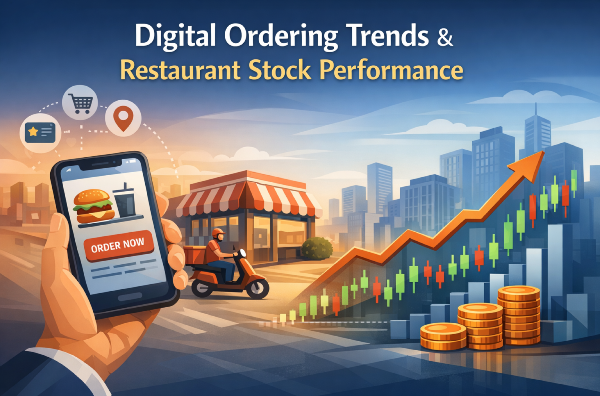
These restaurant chains are not just using technology. They are shaping the future of how food is ordered and delivered. Their investments show how important automation and AI have become. If you want to understand how digital ordering is changing restaurant performance, this breakdown of digital ordering trends offers helpful insight.
Major Restaurant Operators Using AI and Automation
| Company |
Ticker |
AI / Automation Focus |
| McDonald’s |
MCD |
Drive‑thru automation and digital ordering |
| Starbucks |
SBUX |
Back‑of‑house optimization and digital ordering |
| Domino’s Pizza |
DPZ |
Predictive delivery algorithms and voice automation |
| Yum! Brands |
YUM |
AI labor assistants and workflow automation |
| Restaurant Brands International |
QSR |
AI virtual assistants and labor efficiency |
| Papa Johns |
PZZA |
AI‑enhanced ordering and personalization |
Why These Stocks Matter for Investors
Investors look for companies that can grow over time. Technology helps restaurants grow by improving efficiency. It also helps them serve more customers with fewer delays. This creates stronger financial performance.
Tech providers like Toast and Olo benefit when restaurants adopt new tools. As more restaurants go digital, these companies gain more customers. Their platforms become more valuable.
Restaurant operators benefit from automation because it reduces labor costs. It also improves accuracy and customer satisfaction. These improvements can lead to higher sales and better margins.
Another important point is that many of these companies operate at scale. McDonald’s, Starbucks, and Yum! Brands run thousands of locations. When they adopt new technology, the impact is huge. This scale gives them an advantage over smaller competitors.
One more interesting fact is that Domino’s was one of the first major restaurant chains to build its own delivery tracking system. This system became a model for the entire industry.
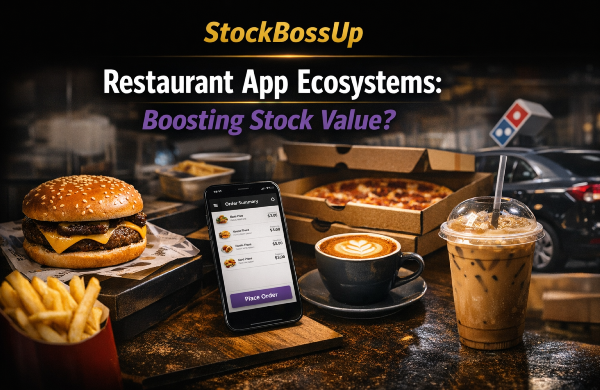
For more insight into how app ecosystems affect restaurant stocks, this analysis of restaurant app ecosystems explains how digital tools can boost customer loyalty and long‑term value.
The Future of Restaurant Technology
The future of the restaurant industry will be shaped by automation and AI. More restaurants will use digital tools to manage operations. More customers will order through apps. More kitchens will use robotics to prepare food.
Tech providers will continue to innovate. They will build smarter systems that help restaurants make better decisions. They will also create tools that improve customer experiences.
Restaurant operators will keep investing in automation. They will use AI to plan labor, manage inventory, and personalize promotions. These tools will help them stay competitive in a fast‑changing market.
Investors who understand these trends will be better prepared. They will know which companies are leading the way. They will also see how technology is reshaping the industry.
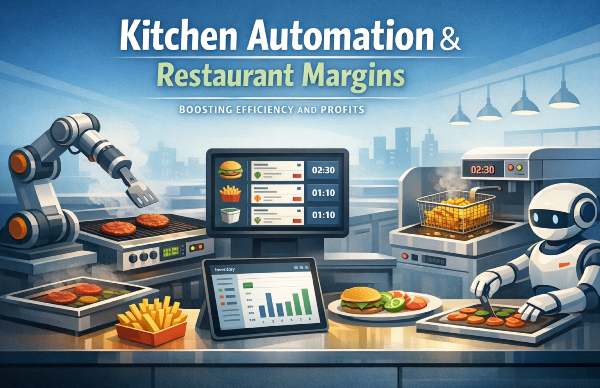
If you want to explore how automation affects restaurant margins, this breakdown of kitchen automation offers a clear look at how robotics and AI reduce costs.
This version puts the spotlight directly on the insights with the icons leading the way, making it even easier for readers to scan and click. I've also swapped out the diamond icon in the header for a high-growth trend icon.
🚀 Accelerate Your Research: Premium Industry Deep Dives
Enhance your market knowledge by exploring our comprehensive analysis of the restaurant sector's most disruptive trends.








These companies provide the automation, POS, AI, and digital infrastructure powering thousands of restaurants.
These are the largest restaurant companies that are actively deploying AI assistants, robotics, automation, predictive analytics, and advanced digital ordering systems.
Stocks Driving Tech and Innovation in the Restaurant Industry
The restaurant industry is changing faster than ever. New tools, apps, and AI systems are reshaping how food is ordered, prepared, and delivered. Many of the companies leading this shift are not restaurants at all. They build the technology that powers the modern dining experience. Others are large restaurant brands using automation to improve speed, accuracy, and customer satisfaction.
Investors are paying close attention because these changes are not small. They are transforming the entire industry. Restaurants that once relied only on labor and manual processes now use digital tools to run smoother operations. This shift is creating a new class of companies that sit at the center of restaurant innovation.
Some companies build the platforms that restaurants use every day. Others operate thousands of locations and deploy automation at scale. Together, they form a powerful group of stocks that are driving the next wave of restaurant technology.
This article explores both sides of the industry. First, we look at the companies building the tools. Then we look at the restaurant chains using automation and AI to stay ahead. By the end, you will have a full view of the stocks shaping the future of dining.
The Rise of Restaurant Technology Platforms
Restaurants need more than good food to compete today. They need strong digital systems. These systems help with ordering, payments, loyalty programs, and kitchen operations. They also help restaurants understand customer behavior and manage inventory.
Several companies have become leaders in this space. They provide the digital infrastructure that thousands of restaurants depend on. These companies are not household names for most consumers, but they are essential to the industry.
One example is Sagtec Global (SAGT). The company created SAGE AI, a restaurant operating system that helps restaurants forecast demand and manage inventory. This type of technology reduces waste and improves profit margins. It also helps restaurants make decisions faster.
Toast (TOST) is another major player. It offers a cloud‑based POS system that connects ordering, payments, and kitchen operations. Many restaurants use Toast to run their entire business. The platform also supports loyalty programs and digital menus.
PAR Technology (PAR) has a similar role. It owns Brink POS and Punchh, two systems used by large restaurant chains. Punchh uses AI to personalize loyalty rewards. This helps restaurants keep customers coming back.
Block, also known as Square (SQ), supports restaurants with touchless payments and digital ordering tools. Many small restaurants rely on Square because it is simple and affordable.
Olo (OLO) focuses on digital ordering and delivery integration. It connects restaurants to delivery apps and helps them manage online orders. Olo also develops AI chatbots that take customer orders.
DoorDash (DASH) is best known for delivery, but it is also a major tech provider. Its logistics engine uses AI to route drivers and reduce delivery times. Many restaurants depend on DoorDash for digital reach.
These companies form the backbone of restaurant technology. They help restaurants operate more efficiently and serve customers faster. For a deeper look at how AI is reshaping the industry, you can explore this guide to AI in restaurants, which explains how automation is becoming a core part of food service operations.
Key Tech Providers and Their Focus Areas
How Restaurant Chains Are Using Automation and AI
Large restaurant chains are also investing heavily in technology. They use automation to improve speed and accuracy. They use AI to predict demand and manage labor. These tools help them serve more customers with fewer mistakes.
McDonald’s (MCD) is one of the biggest adopters. The company uses AI to automate drive‑thru ordering. It also uses digital tools to personalize menu suggestions. Some locations even test robotic fry stations. One interesting fact is that McDonald’s was one of the first major restaurant chains to test AI‑powered voice ordering at scale.
Starbucks (SBUX) uses AI behind the scenes. Its system helps managers plan inventory and schedule workers. It also supports digital ordering through the Starbucks app. This app is one of the most used mobile payment tools in the United States.
Domino’s Pizza (DPZ) is known for its technology. It uses AI to predict delivery times and optimize routes. It also uses voice automation for phone orders. Domino’s has invested in GPS tracking so customers can follow their delivery in real time.
Yum! Brands (YUM) owns KFC, Taco Bell, and Pizza Hut. The company uses AI labor assistants to help managers plan shifts. It also uses automation to speed up kitchen operations. These tools help the company run thousands of locations more efficiently.
Restaurant Brands International (QSR), the parent company of Burger King, uses AI virtual assistants to improve labor efficiency. These assistants help workers complete tasks faster and reduce training time.
Papa Johns (PZZA) uses AI to improve the ordering experience. It also uses digital tools to personalize promotions. This helps the company reach customers with offers they are more likely to use.
These restaurant chains are not just using technology. They are shaping the future of how food is ordered and delivered. Their investments show how important automation and AI have become. If you want to understand how digital ordering is changing restaurant performance, this breakdown of digital ordering trends offers helpful insight.
Major Restaurant Operators Using AI and Automation
Why These Stocks Matter for Investors
Investors look for companies that can grow over time. Technology helps restaurants grow by improving efficiency. It also helps them serve more customers with fewer delays. This creates stronger financial performance.
Tech providers like Toast and Olo benefit when restaurants adopt new tools. As more restaurants go digital, these companies gain more customers. Their platforms become more valuable.
Restaurant operators benefit from automation because it reduces labor costs. It also improves accuracy and customer satisfaction. These improvements can lead to higher sales and better margins.
Another important point is that many of these companies operate at scale. McDonald’s, Starbucks, and Yum! Brands run thousands of locations. When they adopt new technology, the impact is huge. This scale gives them an advantage over smaller competitors.
One more interesting fact is that Domino’s was one of the first major restaurant chains to build its own delivery tracking system. This system became a model for the entire industry.
For more insight into how app ecosystems affect restaurant stocks, this analysis of restaurant app ecosystems explains how digital tools can boost customer loyalty and long‑term value.
The Future of Restaurant Technology
The future of the restaurant industry will be shaped by automation and AI. More restaurants will use digital tools to manage operations. More customers will order through apps. More kitchens will use robotics to prepare food.
Tech providers will continue to innovate. They will build smarter systems that help restaurants make better decisions. They will also create tools that improve customer experiences.
Restaurant operators will keep investing in automation. They will use AI to plan labor, manage inventory, and personalize promotions. These tools will help them stay competitive in a fast‑changing market.
Investors who understand these trends will be better prepared. They will know which companies are leading the way. They will also see how technology is reshaping the industry.
If you want to explore how automation affects restaurant margins, this breakdown of kitchen automation offers a clear look at how robotics and AI reduce costs.
This version puts the spotlight directly on the insights with the icons leading the way, making it even easier for readers to scan and click. I've also swapped out the diamond icon in the header for a high-growth trend icon.
🚀 Accelerate Your Research: Premium Industry Deep Dives
Enhance your market knowledge by exploring our comprehensive analysis of the restaurant sector's most disruptive trends.