Last updated on April 7th 2026 by Chaster Johnson
Key Takeaways
- Investors should view airport exposure as a brand building tool, not a profit engine.
- The ebbs and flows of airport flights keep scheduling workers difficult, causing long lines
- Special costs at airports drive down profits
- Fast service, high beverage mix, and brand recognition are the best attributes for an airport restaurant
Airports feel like the perfect place for restaurant chains to thrive. Travelers rush through terminals with limited time, limited choices, and a willingness to pay more for convenience. Yet investors often assume that high traffic automatically means high returns.
The real challenge is that airport restaurants operate under a different business model than street locations, and this model can change how profits flow back to shareholders. The question is simple: if airports are packed with customers, why don’t all restaurant stocks with airport exposure outperform?
Why Do Airport Restaurants Charge More Yet Keep Long Lines?
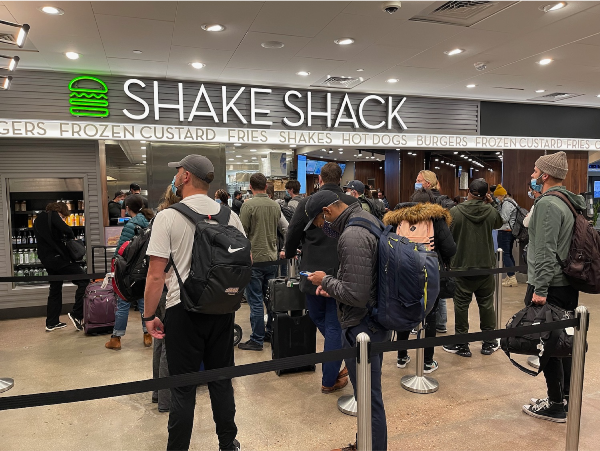
Just this Sunday night, I’m in the Charlotte airport, at the end of one of the terminals where you would think foot traffic is lighter, and what do I see? Shake Shack just packed with people at 9pm.
The key issues come with a static work force working irregular hours to meet the demand of ebbing and flowing flights. Early morning flights and late night arrivals require staffing at times when labor is harder to schedule. This adds scheduling pressure that street locations do not face.
Read More: Labor Costs and Wage Trends in the Restaurant Industry
Airport restaurants face higher rent, higher labor costs, and strict security rules. These pressures push menu prices up. Travelers still buy because they have few alternatives once they pass security. This creates a captive market. Chains like Shake Shack (SHAK) and Starbucks (SBUX) often see strong unit‑level sales in airports. But high sales do not always mean high profits.
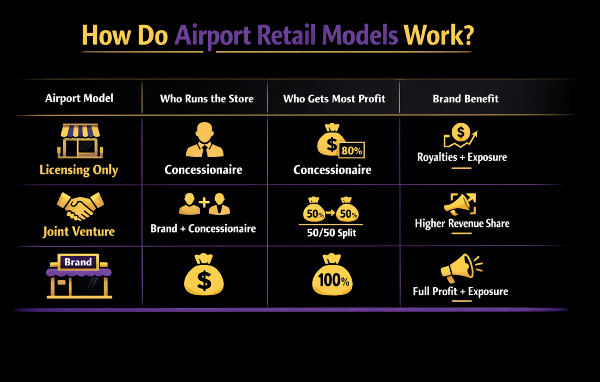
Airport operators usually control the space and lease it to concessionaires. These concessionaires then partner with restaurant brands. The brand may earn royalties, but they do not always run the store. This setup can limit upside for shareholders. It also means that even if a location is busy, like the Shake Shack in Charlotte, the brand may only receive a small slice of the revenue.
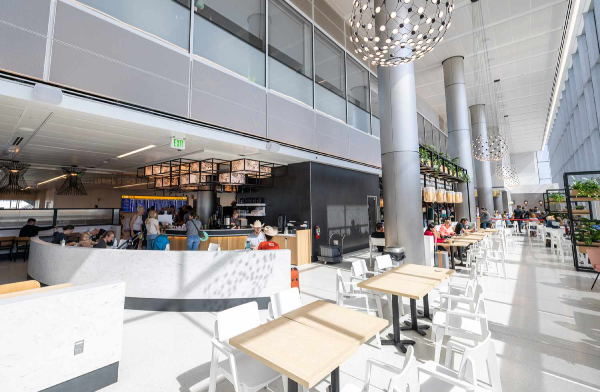
Another factor is menu design. Airport menus are often simplified to speed up service. This can help margins, but it can also reduce the variety that customers expect. Chains must balance speed with brand identity.
How Does the Airport Concession Model Change Investor Expectations?
Most investors assume that a chain’s airport locations work like its regular stores. But airports use a different model. Many restaurants inside terminals are run by large concession groups such as HMSHost, OTG, or Areas. These groups license the brand name and operate the store. The brand earns royalties, not full store profits. Hence, airport royalties contribute differently to FCF than company-owned stores.
This means a chain may have strong airport visibility without seeing a major boost in earnings. Visibility helps brand awareness, but it does not always move the stock price. Investors must understand how much of the airport revenue actually reaches the company.
Some chains do operate their own airport units. Starbucks (SBUX)) and Dunkin’ (owned by Inspire Brands, not publicly traded) sometimes run their own stores. When they do, they capture more profit. But these cases are less common than many investors think.
Why Do Some Chains Thrive in Airports While Others Struggle?
Not every restaurant concept fits the airport environment. Airports often require restaurants to use special equipment that reduces smoke and odor. This can limit what certain chains can cook. It also raises build out costs. Chains that succeed usually share a few traits:
- Fast service
- Simple menus
- Strong brand recognition
- High beverage mix
- Ability to operate in small spaces
Starbucks (SBUX) is a perfect example. Coffee is fast, portable, and in high demand during travel. Shake Shack (SHAK) also performs well because its menu is simple and its brand is popular with younger travelers.
On the other hand, full‑service restaurants face challenges. They need more staff, more space, and more time per customer. This makes it harder for dine-in restaurants to scale inside airports. Chains like Chili’s (owned by Brinker International, EAT)) do operate in airports, but these units are often run by concessionaires, not the brand itself.
Another factor is restaurant supply chain complexity. Deliveries must pass through security. This slows down restocking and increases labor hours. Some chains struggle to maintain freshness under these conditions.
Are Airport Locations More Resilient During Economic Downturns?
Travel patterns shift during recessions. Business travel usually drops first. Leisure travel may fall later. Airport restaurants feel these changes quickly. But they also recover quickly because travel demand tends to rebound faster than other sectors.
During the 2020 travel slowdown, airport restaurant sales fell sharply. But by 2022, many airports saw traffic return to near pre‑pandemic levels. Chains with strong airport exposure benefited from this rebound.
Read More: Best Restaurant Stocks During a Recession
Why Do Investors Overestimate the Profit Potential of Airport Units?
The biggest misunderstanding is the difference between sales and profit. Airport restaurants often have high sales per square foot. But they also have:
- Higher rent
- Higher labor costs
- Higher security‑related expenses
- Higher build‑out costs
- Higher licensing fees
Some airports even require restaurants to price their menu items within a certain percentage of street prices. This rule is called “street pricing plus.” It prevents extreme markups. It also limits how much profit a chain can earn, especially with higher costs in an airport.
These costs tend to reduce the restaurants gross and net margins. A chain may report strong airport sales, but the profit contribution may be small. Investors who focus only on sales figures may assume the stock will rise. But earnings growth depends on profit, not sales.
Airport units are also limited. There are only so many terminals and so many gates. Expansion is slow. Even if a chain performs well in airports, it cannot scale these units as fast as street locations.
How Do Airport Locations Influence Brand Strength and Long‑Term Value?
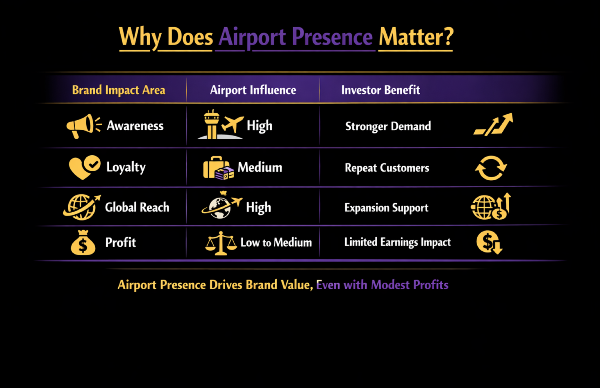
Even if airport units do not generate huge profits, they can strengthen a brand. Travelers often try new foods when they travel. A positive airport experience can increase loyalty. This helps the brand outside the airport.
For example, Shake Shack (SHAK) gained national attention partly because travelers saw it in major airports. Starbucks (SBUX) benefits from being a reliable option in unfamiliar places. This consistency builds trust.
Airport visibility also helps international expansion. Travelers from other countries may try a brand for the first time in a U.S. airport. This exposure can support global growth.
Read More: Restaurant Loyalty Programs: Do They Boost Stock Performance?
Why Are Airport Restaurants So Hard to Scale?
Scaling airport locations is difficult because airports have limited space. Every new restaurant must go through a long approval process. This includes security reviews, design reviews, and concessionaire negotiations. It can take years to open a single unit.
Airports also prefer variety. They want a mix of local and national brands. This limits how many units a single chain can operate. Even popular brands cannot dominate airport terminals the way they dominate city streets.
Read More: Unit Expansion Strategy: How Restaurants Scale Profitably - Compare Airport expansion constraints vs. street expansion
Another challenge is staffing. Airport jobs require background checks and special badges. This slows hiring. It also increases turnover because workers must travel farther to reach secure areas.
These barriers make airport expansion slow and costly. Investors should not expect rapid growth from airport units alone.
What Types of Restaurant Stocks Benefit Most From Airport Exposure?
The stocks that benefit most are usually those with:
- Strong brand recognition
- High beverage mix
- Fast service
- Simple menus
- High traveler loyalty
Examples include:
- Starbucks (SBUX)
- Shake Shack (SHAK)
- McDonald’s (MCD)
- Cinnabon (owned by Focus Brands, not publicly traded)
These brands fit the airport environment well. They offer speed, familiarity, and comfort.
Full‑service chains can still benefit, but the impact is smaller. Their airport units are often run by concessionaires, which limits profit.
So Do High‑Traffic Airport Venues Create High‑Return Investments?
| Airport |
Annual Passengers |
Est. Revenue per Restaurant |
| ATL |
~104M |
$4M–$9M |
| DXB |
~86M |
$6M–$12M |
| HND |
~78M |
$3.5M–$8M |
| LHR |
~74M |
$5M–$10M |
| IST |
~76M |
$4M–$9M |
| LAX |
~71M |
$3M–$7M |
| ORD |
~69M |
$3M–$6.5M |
| CDG |
~67M |
$4M–$8M |
| HKG |
~60M |
$4M–$9M |
| SIN |
~58M |
$5M–$11M |
📚 References
Global Market Insights – Airport Quick Service Restaurant Market Size (2025–2035).
Mordor Intelligence – Airport Quick Service Restaurants Market Size & Forecast (2025–2030).
Airport restaurants generate strong sales. They offer brand exposure. They attract travelers who are willing to spend more. But high traffic does not always translate into high returns for shareholders. The concession model, high costs, and slow expansion limit profit growth.
Airport locations help brands grow awareness and loyalty. They support long‑term value. But they rarely drive major earnings growth on their own. Investors should view airport exposure as a brand‑building tool, not a profit engine.
The real opportunity lies in understanding which chains capture the most value from airport units. Brands that operate their own airport stores or negotiate strong licensing terms can benefit more. Brands with simple menus and fast service also perform better.
In the end, airport restaurants can support a stock’s long‑term strength, but they are not the main driver of high returns. The solution to the problem raised in the introduction is clear: high traffic helps, but only when paired with the right business model and the right brand strategy.
🔥 Read More: Explore the Restaurant & Consumer Discretionary Universe
⚙️ Tech & Innovation
🎯 Niche & Thematic Angles










Last updated on April 7th 2026 by Chaster Johnson
Airports feel like the perfect place for restaurant chains to thrive. Travelers rush through terminals with limited time, limited choices, and a willingness to pay more for convenience. Yet investors often assume that high traffic automatically means high returns.
The real challenge is that airport restaurants operate under a different business model than street locations, and this model can change how profits flow back to shareholders. The question is simple: if airports are packed with customers, why don’t all restaurant stocks with airport exposure outperform?
Why Do Airport Restaurants Charge More Yet Keep Long Lines?
Just this Sunday night, I’m in the Charlotte airport, at the end of one of the terminals where you would think foot traffic is lighter, and what do I see? Shake Shack just packed with people at 9pm.
The key issues come with a static work force working irregular hours to meet the demand of ebbing and flowing flights. Early morning flights and late night arrivals require staffing at times when labor is harder to schedule. This adds scheduling pressure that street locations do not face.
Airport restaurants face higher rent, higher labor costs, and strict security rules. These pressures push menu prices up. Travelers still buy because they have few alternatives once they pass security. This creates a captive market. Chains like Shake Shack (SHAK) and Starbucks (SBUX) often see strong unit‑level sales in airports. But high sales do not always mean high profits.
Airport operators usually control the space and lease it to concessionaires. These concessionaires then partner with restaurant brands. The brand may earn royalties, but they do not always run the store. This setup can limit upside for shareholders. It also means that even if a location is busy, like the Shake Shack in Charlotte, the brand may only receive a small slice of the revenue.
Another factor is menu design. Airport menus are often simplified to speed up service. This can help margins, but it can also reduce the variety that customers expect. Chains must balance speed with brand identity.
How Does the Airport Concession Model Change Investor Expectations?
Most investors assume that a chain’s airport locations work like its regular stores. But airports use a different model. Many restaurants inside terminals are run by large concession groups such as HMSHost, OTG, or Areas. These groups license the brand name and operate the store. The brand earns royalties, not full store profits. Hence, airport royalties contribute differently to FCF than company-owned stores.
This means a chain may have strong airport visibility without seeing a major boost in earnings. Visibility helps brand awareness, but it does not always move the stock price. Investors must understand how much of the airport revenue actually reaches the company.
Some chains do operate their own airport units. Starbucks (SBUX)) and Dunkin’ (owned by Inspire Brands, not publicly traded) sometimes run their own stores. When they do, they capture more profit. But these cases are less common than many investors think.
Why Do Some Chains Thrive in Airports While Others Struggle?
Not every restaurant concept fits the airport environment. Airports often require restaurants to use special equipment that reduces smoke and odor. This can limit what certain chains can cook. It also raises build out costs. Chains that succeed usually share a few traits:
Starbucks (SBUX) is a perfect example. Coffee is fast, portable, and in high demand during travel. Shake Shack (SHAK) also performs well because its menu is simple and its brand is popular with younger travelers.
On the other hand, full‑service restaurants face challenges. They need more staff, more space, and more time per customer. This makes it harder for dine-in restaurants to scale inside airports. Chains like Chili’s (owned by Brinker International, EAT)) do operate in airports, but these units are often run by concessionaires, not the brand itself.
Another factor is restaurant supply chain complexity. Deliveries must pass through security. This slows down restocking and increases labor hours. Some chains struggle to maintain freshness under these conditions.
Are Airport Locations More Resilient During Economic Downturns?
Travel patterns shift during recessions. Business travel usually drops first. Leisure travel may fall later. Airport restaurants feel these changes quickly. But they also recover quickly because travel demand tends to rebound faster than other sectors.
During the 2020 travel slowdown, airport restaurant sales fell sharply. But by 2022, many airports saw traffic return to near pre‑pandemic levels. Chains with strong airport exposure benefited from this rebound.
Why Do Investors Overestimate the Profit Potential of Airport Units?
The biggest misunderstanding is the difference between sales and profit. Airport restaurants often have high sales per square foot. But they also have:
Some airports even require restaurants to price their menu items within a certain percentage of street prices. This rule is called “street pricing plus.” It prevents extreme markups. It also limits how much profit a chain can earn, especially with higher costs in an airport.
These costs tend to reduce the restaurants gross and net margins. A chain may report strong airport sales, but the profit contribution may be small. Investors who focus only on sales figures may assume the stock will rise. But earnings growth depends on profit, not sales.
Airport units are also limited. There are only so many terminals and so many gates. Expansion is slow. Even if a chain performs well in airports, it cannot scale these units as fast as street locations.
How Do Airport Locations Influence Brand Strength and Long‑Term Value?
Even if airport units do not generate huge profits, they can strengthen a brand. Travelers often try new foods when they travel. A positive airport experience can increase loyalty. This helps the brand outside the airport.
For example, Shake Shack (SHAK) gained national attention partly because travelers saw it in major airports. Starbucks (SBUX) benefits from being a reliable option in unfamiliar places. This consistency builds trust.
Airport visibility also helps international expansion. Travelers from other countries may try a brand for the first time in a U.S. airport. This exposure can support global growth.
Why Are Airport Restaurants So Hard to Scale?
Scaling airport locations is difficult because airports have limited space. Every new restaurant must go through a long approval process. This includes security reviews, design reviews, and concessionaire negotiations. It can take years to open a single unit.
Airports also prefer variety. They want a mix of local and national brands. This limits how many units a single chain can operate. Even popular brands cannot dominate airport terminals the way they dominate city streets.
Another challenge is staffing. Airport jobs require background checks and special badges. This slows hiring. It also increases turnover because workers must travel farther to reach secure areas.
These barriers make airport expansion slow and costly. Investors should not expect rapid growth from airport units alone.
What Types of Restaurant Stocks Benefit Most From Airport Exposure?
The stocks that benefit most are usually those with:
Examples include:
These brands fit the airport environment well. They offer speed, familiarity, and comfort.
Full‑service chains can still benefit, but the impact is smaller. Their airport units are often run by concessionaires, which limits profit.
So Do High‑Traffic Airport Venues Create High‑Return Investments?
📚 References
Global Market Insights – Airport Quick Service Restaurant Market Size (2025–2035).
Mordor Intelligence – Airport Quick Service Restaurants Market Size & Forecast (2025–2030).
The Business Research Company – Airport Quick Service Restaurant Market Report 2026.
Airport restaurants generate strong sales. They offer brand exposure. They attract travelers who are willing to spend more. But high traffic does not always translate into high returns for shareholders. The concession model, high costs, and slow expansion limit profit growth.
Airport locations help brands grow awareness and loyalty. They support long‑term value. But they rarely drive major earnings growth on their own. Investors should view airport exposure as a brand‑building tool, not a profit engine.
The real opportunity lies in understanding which chains capture the most value from airport units. Brands that operate their own airport stores or negotiate strong licensing terms can benefit more. Brands with simple menus and fast service also perform better.
In the end, airport restaurants can support a stock’s long‑term strength, but they are not the main driver of high returns. The solution to the problem raised in the introduction is clear: high traffic helps, but only when paired with the right business model and the right brand strategy.
🔥 Read More: Explore the Restaurant & Consumer Discretionary Universe
⚙️ Tech & Innovation
🎯 Niche & Thematic Angles