Last updated on April 12th 2026 by Chaster Johnson
Key Takeaways
Food halls are redefining restaurant growth.
They offer flexible, low-cost entry points for brands and create vibrant, community-driven spaces that attract diverse customers. This model reduces risk and accelerates innovation compared to traditional restaurant formats.
Major restaurant companies are adapting strategically.
Brands like Shake Shack, Starbucks, and Yum! Brands use food halls to test new markets, capture foot traffic, and launch smaller concepts—turning what began as a local trend into a scalable business strategy.
Investors often underestimate the trend’s reach and impact.
Food halls are expanding beyond urban centers into suburbs and airports, providing valuable real-time data on consumer behavior and giving both small and large restaurant companies a competitive edge.
Adaptability is the new measure of restaurant success.
The rise of food halls shows that future growth depends less on store count and more on flexibility, experimentation, and responsiveness to consumer trends—qualities that will define the next generation of winning restaurant stocks.
Introduction
Food halls are popping up in cities, suburbs, airports, and even inside old factories. Investors see the trend. Restaurant companies see it too. Yet many people still struggle to understand how food halls fit into the world of restaurant stocks.
Food halls are not the same as food courts. They are not fast‑food clusters or mall leftovers. They are something new, and they are reshaping how restaurants grow. The question is whether investors can use this shift to find better opportunities in the market. To get there, we need to understand why food halls matter, how they work, and which restaurant stocks stand to benefit.
Why Are Food Halls Growing Faster Than Traditional Restaurants?
Food halls have exploded in popularity over the last decade. They offer a mix of local vendors, small kitchens, kitchen automation potential, and flexible leases. This model reduces risk for operators and gives customers more variety. It also creates a built‑in audience for new brands.
One reason for the growth is simple: people want experiences. A food hall feels like a community space. It blends dining, events, and local culture. This makes it more appealing than a single restaurant concept. Another reason is cost. Opening a full restaurant can be expensive. A food hall stall can cost a fraction of that.
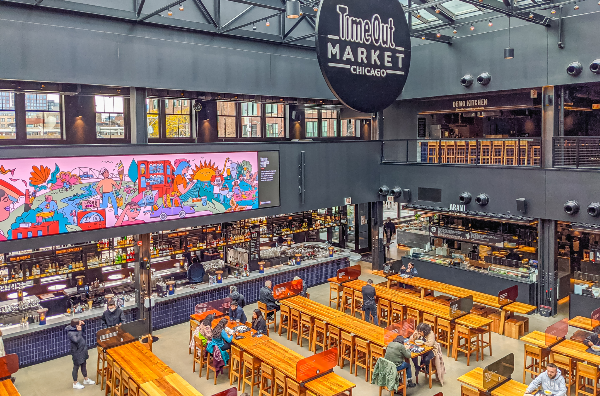
TimeOut Food Hall in Chicago
Some restaurant companies use food halls as testing grounds. They launch new menu ideas, try new branding, or enter new cities without the cost of a full build‑out. This gives investors early signals about which brands are gaining traction.
Food halls also help landlords. They fill large spaces with multiple vendors instead of relying on one anchor tenant. This spreads risk and keeps foot traffic steady.
Below is a simple comparison that shows why food halls are attractive to operators and investors.
| Feature |
Traditional Restaurant |
Food Hall Vendor |
| Startup Cost |
High |
Low |
| Lease Length |
Long-term |
Short-term |
| Menu Flexibility |
Limited |
High |
| Customer Variety |
Low |
High |
| Failure Risk |
Higher |
Lower |
What Makes Food Halls a Threat to Some Restaurant Chains?
Not every restaurant chain benefits from the rise of food halls. Some face new competition. A food hall can offer ten or more unique concepts in one place. This makes it harder for a single chain to stand out.
Fast‑casual chains may feel the pressure first. When customers can choose between a local taco stand, a ramen stall, and a gourmet sandwich vendor, they may skip the national brands. Even strong companies like Chipotle (CMG) must pay attention to this shift.
Another challenge is speed. Food hall vendors can change menus quickly by using data and AI to make faster decisions. They can pivot to new trends faster than large chains. This agility can pull customers away from slower‑moving brands.
There is also a real estate impact. Some developers now prefer food halls over single‑tenant restaurants. This can limit expansion options for chains that rely on predictable locations.
Still, not all chains are at risk. Some are adapting. Some are even using food halls to their advantage.
How Are Major Restaurant Companies Using Food Halls to Expand?

Several publicly traded restaurant companies have already embraced food halls. They use them to test new markets, build brand awareness, and reduce costs.
For example, Shake Shack (SHAK) has opened locations near or inside food hall developments in major cities. This gives them access to high foot traffic without the cost of a full standalone build.
Starbucks (SBUX) has also placed stores near food halls to capture spillover traffic. Coffee pairs well with food hall environments, and the brand benefits from the steady flow of customers.
Some companies go even further. They create mini‑brands designed specifically for food halls. These smaller concepts allow them to experiment without risking their main brand identity.
Here is a look at how different types of restaurant companies use food halls:
| Company Type |
Food Hall Strategy |
Benefit |
| Fast Casual |
Test new markets |
Lower risk |
| Coffee Chains |
Capture foot traffic |
Higher volume |
| Full-Service |
Launch small-format concepts |
Lower overhead |
| Emerging Brands |
Build awareness |
Faster growth |
Fun Fact: the first modern U.S. food hall was built inside a former printing plant, showing how adaptive reuse can spark new dining trends.
Why Do Most Investors Misjudge the Impact of Food Halls?
Many investors still treat food halls as a niche trend. They assume the model only works in big cities or tourist areas. This is no longer true. Food halls are spreading into suburbs, college towns (another growth opportunity in the restaurant industry, and mixed‑use developments.
Investors also underestimate the data advantage food halls provide. Operators can track foot traffic, vendor performance, and customer preferences in real time. This data helps them refine concepts faster than traditional restaurants.
Another mistake is assuming food halls only help small vendors. In reality, large restaurant companies use them strategically. They can test new menu items, gather customer feedback, and adjust pricing before rolling out changes nationwide.
Some investors also overlook the real estate angle. Food halls often anchor new developments. This gives restaurant companies access to high‑value locations that might otherwise be too expensive.
Below is a comparison of investor assumptions versus reality.
| Investor Assumption |
Reality |
| Food halls are niche |
Food halls are expanding nationwide |
| Only small vendors benefit |
Large chains use them strategically |
| Limited growth potential |
Strong growth in suburbs and airports |
| High failure risk |
Lower risk due to shared costs |
Which Restaurant Stocks Could Benefit the Most?
Several restaurant stocks are positioned to benefit from the rise of food halls. These companies either operate in similar environments or use food halls to expand.
Sweetgreen (SG) is one example. Their small footprint and tech‑driven model fit well with food hall environments. They can open quickly and attract health‑focused customers.
Yum! Brands (YUM) could also benefit. Their portfolio includes Taco Bell, KFC, and Pizza Hut. They have the resources to test new concepts in food halls and scale them fast.
Restaurant Brands International (QSR) may gain from food hall partnerships as well. Their brands, including Burger King and Popeyes, already thrive in high‑traffic environments.
Another interesting angle is ghost kitchens. Some food halls now include shared kitchen spaces. This supports delivery‑focused brands and hybrid models. Some ghost kitchens operate with no physical storefront at all, yet they can outsell nearby restaurants during peak delivery hours.
Why Are Food Halls Becoming a Magnet for Younger Diners?
Younger diners value variety, speed, and authenticity. Food halls deliver all three. They offer global flavors, local vendors, and menus that change often. Food halls are adapting to customer preferences like pet-friendly restaurants. This keeps the experience fresh.
Food halls also fit the social habits of younger generations. They are great for groups because everyone can choose something different. They also host events, pop‑ups, and seasonal menus.
Another reason is digital convenience. Many food halls use mobile ordering systems. Customers can browse menus from multiple vendors and order from one app. This blends the convenience of fast food with the quality of local dining.
Restaurant companies that appeal to younger diners may see stronger performance in food hall environments. Brands with bold flavors, plant‑based options, or fusion menus tend to stand out.
What Risks Should Investors Watch as Food Halls Expand?
Food halls offer opportunities, but they also come with risks. Investors should watch for:
- Oversaturation in major cities
- High vendor turnover
- Real estate costs in premium locations
- Competition from ghost kitchens
- Shifts in consumer spending
Some food halls struggle when they rely too heavily on tourism. Others face challenges when vendors cannot keep up with demand. Investors should look for food halls with strong management, diverse vendors, and stable foot traffic.
Restaurant companies must also adapt. Those that ignore the trend may lose market share. Those that embrace it may find new paths to growth.
How Can Investors Use Food Halls to Spot Early Trends?
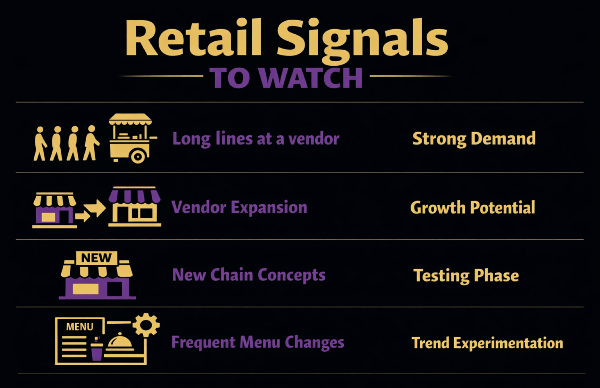
Food halls act like real‑world testing labs. Investors can visit them to see which concepts attract the longest lines. They can watch which vendors expand to new locations. They can track which cuisines gain popularity.
This gives investors an edge. They can identify rising food trends before they hit the mainstream. They can also spot struggling concepts early.
For example, if a vendor inside a food hall expands into multiple stalls or launches a standalone restaurant, that may signal strong demand. If a major chain tests a new menu item in a food hall, investors can watch customer reactions before earnings reports.
Below is a simple framework investors can use:
What Is the Real Opportunity Behind the Food Hall Boom?
The real opportunity is not the food halls themselves. It is the shift in how restaurants grow. Food halls reduce risk, speed up testing, and create new ways for brands to reach customers. They also reshape real estate, customer behavior, and menu innovation.
Restaurant companies that understand this shift will have an advantage. Investors who recognize the pattern early can find stocks that benefit from the new model.
Most investors look at restaurant stocks through an old lens. They focus on store counts, same‑store sales, and expansion plans. But the rise of food halls shows that growth can come from smaller footprints, flexible formats, and rapid experimentation.
The solution is to evaluate restaurant stocks not just by their current footprint, but by their adaptability. The brands that thrive in food hall environments may be the ones that lead the next decade of restaurant growth.
🔥 Read More: Explore the Restaurant & Consumer Discretionary Universe
⚙️ Tech & Innovation
🎯 Niche & Thematic Angles







Last updated on April 12th 2026 by Chaster Johnson
Key Takeaways
Food halls are redefining restaurant growth.
They offer flexible, low-cost entry points for brands and create vibrant, community-driven spaces that attract diverse customers. This model reduces risk and accelerates innovation compared to traditional restaurant formats.Major restaurant companies are adapting strategically.
Brands like Shake Shack, Starbucks, and Yum! Brands use food halls to test new markets, capture foot traffic, and launch smaller concepts—turning what began as a local trend into a scalable business strategy.Investors often underestimate the trend’s reach and impact.
Food halls are expanding beyond urban centers into suburbs and airports, providing valuable real-time data on consumer behavior and giving both small and large restaurant companies a competitive edge.Adaptability is the new measure of restaurant success.
The rise of food halls shows that future growth depends less on store count and more on flexibility, experimentation, and responsiveness to consumer trends—qualities that will define the next generation of winning restaurant stocks.
Introduction
Food halls are popping up in cities, suburbs, airports, and even inside old factories. Investors see the trend. Restaurant companies see it too. Yet many people still struggle to understand how food halls fit into the world of restaurant stocks.
Food halls are not the same as food courts. They are not fast‑food clusters or mall leftovers. They are something new, and they are reshaping how restaurants grow. The question is whether investors can use this shift to find better opportunities in the market. To get there, we need to understand why food halls matter, how they work, and which restaurant stocks stand to benefit.
Why Are Food Halls Growing Faster Than Traditional Restaurants?
Food halls have exploded in popularity over the last decade. They offer a mix of local vendors, small kitchens, kitchen automation potential, and flexible leases. This model reduces risk for operators and gives customers more variety. It also creates a built‑in audience for new brands.
One reason for the growth is simple: people want experiences. A food hall feels like a community space. It blends dining, events, and local culture. This makes it more appealing than a single restaurant concept. Another reason is cost. Opening a full restaurant can be expensive. A food hall stall can cost a fraction of that.
TimeOut Food Hall in Chicago
Some restaurant companies use food halls as testing grounds. They launch new menu ideas, try new branding, or enter new cities without the cost of a full build‑out. This gives investors early signals about which brands are gaining traction.
Food halls also help landlords. They fill large spaces with multiple vendors instead of relying on one anchor tenant. This spreads risk and keeps foot traffic steady.
Below is a simple comparison that shows why food halls are attractive to operators and investors.
What Makes Food Halls a Threat to Some Restaurant Chains?
Not every restaurant chain benefits from the rise of food halls. Some face new competition. A food hall can offer ten or more unique concepts in one place. This makes it harder for a single chain to stand out.
Fast‑casual chains may feel the pressure first. When customers can choose between a local taco stand, a ramen stall, and a gourmet sandwich vendor, they may skip the national brands. Even strong companies like Chipotle (CMG) must pay attention to this shift.
Another challenge is speed. Food hall vendors can change menus quickly by using data and AI to make faster decisions. They can pivot to new trends faster than large chains. This agility can pull customers away from slower‑moving brands.
There is also a real estate impact. Some developers now prefer food halls over single‑tenant restaurants. This can limit expansion options for chains that rely on predictable locations.
Still, not all chains are at risk. Some are adapting. Some are even using food halls to their advantage.
How Are Major Restaurant Companies Using Food Halls to Expand?
Legacy Hall in Plano, Texas
Several publicly traded restaurant companies have already embraced food halls. They use them to test new markets, build brand awareness, and reduce costs.
For example, Shake Shack (SHAK) has opened locations near or inside food hall developments in major cities. This gives them access to high foot traffic without the cost of a full standalone build.
Starbucks (SBUX) has also placed stores near food halls to capture spillover traffic. Coffee pairs well with food hall environments, and the brand benefits from the steady flow of customers.
Some companies go even further. They create mini‑brands designed specifically for food halls. These smaller concepts allow them to experiment without risking their main brand identity.
Here is a look at how different types of restaurant companies use food halls:
Why Do Most Investors Misjudge the Impact of Food Halls?
Many investors still treat food halls as a niche trend. They assume the model only works in big cities or tourist areas. This is no longer true. Food halls are spreading into suburbs, college towns (another growth opportunity in the restaurant industry, and mixed‑use developments.
Investors also underestimate the data advantage food halls provide. Operators can track foot traffic, vendor performance, and customer preferences in real time. This data helps them refine concepts faster than traditional restaurants.
Another mistake is assuming food halls only help small vendors. In reality, large restaurant companies use them strategically. They can test new menu items, gather customer feedback, and adjust pricing before rolling out changes nationwide.
Some investors also overlook the real estate angle. Food halls often anchor new developments. This gives restaurant companies access to high‑value locations that might otherwise be too expensive.
Below is a comparison of investor assumptions versus reality.
Which Restaurant Stocks Could Benefit the Most?
Several restaurant stocks are positioned to benefit from the rise of food halls. These companies either operate in similar environments or use food halls to expand.
Sweetgreen (SG) is one example. Their small footprint and tech‑driven model fit well with food hall environments. They can open quickly and attract health‑focused customers.
Yum! Brands (YUM) could also benefit. Their portfolio includes Taco Bell, KFC, and Pizza Hut. They have the resources to test new concepts in food halls and scale them fast.
Restaurant Brands International (QSR) may gain from food hall partnerships as well. Their brands, including Burger King and Popeyes, already thrive in high‑traffic environments.
Another interesting angle is ghost kitchens. Some food halls now include shared kitchen spaces. This supports delivery‑focused brands and hybrid models. Some ghost kitchens operate with no physical storefront at all, yet they can outsell nearby restaurants during peak delivery hours.
Why Are Food Halls Becoming a Magnet for Younger Diners?
Younger diners value variety, speed, and authenticity. Food halls deliver all three. They offer global flavors, local vendors, and menus that change often. Food halls are adapting to customer preferences like pet-friendly restaurants. This keeps the experience fresh.
Food halls also fit the social habits of younger generations. They are great for groups because everyone can choose something different. They also host events, pop‑ups, and seasonal menus.
Another reason is digital convenience. Many food halls use mobile ordering systems. Customers can browse menus from multiple vendors and order from one app. This blends the convenience of fast food with the quality of local dining.
Restaurant companies that appeal to younger diners may see stronger performance in food hall environments. Brands with bold flavors, plant‑based options, or fusion menus tend to stand out.
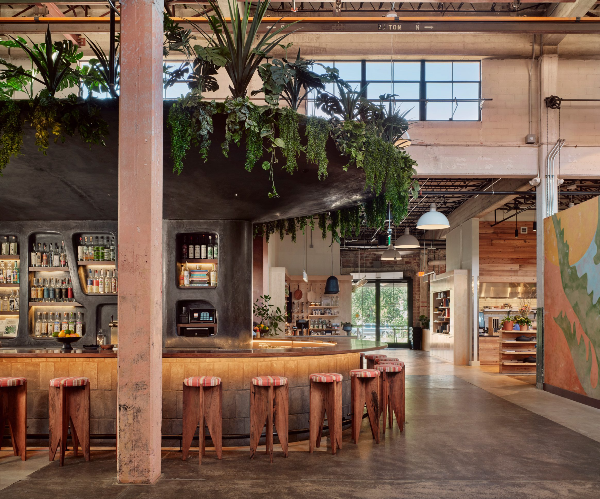
A food hall in a renovated glass factory
What Risks Should Investors Watch as Food Halls Expand?
Food halls offer opportunities, but they also come with risks. Investors should watch for:
Some food halls struggle when they rely too heavily on tourism. Others face challenges when vendors cannot keep up with demand. Investors should look for food halls with strong management, diverse vendors, and stable foot traffic.
Restaurant companies must also adapt. Those that ignore the trend may lose market share. Those that embrace it may find new paths to growth.
How Can Investors Use Food Halls to Spot Early Trends?
Food halls act like real‑world testing labs. Investors can visit them to see which concepts attract the longest lines. They can watch which vendors expand to new locations. They can track which cuisines gain popularity.
This gives investors an edge. They can identify rising food trends before they hit the mainstream. They can also spot struggling concepts early.
For example, if a vendor inside a food hall expands into multiple stalls or launches a standalone restaurant, that may signal strong demand. If a major chain tests a new menu item in a food hall, investors can watch customer reactions before earnings reports.
Below is a simple framework investors can use:
What Is the Real Opportunity Behind the Food Hall Boom?
The real opportunity is not the food halls themselves. It is the shift in how restaurants grow. Food halls reduce risk, speed up testing, and create new ways for brands to reach customers. They also reshape real estate, customer behavior, and menu innovation.
Restaurant companies that understand this shift will have an advantage. Investors who recognize the pattern early can find stocks that benefit from the new model.
Most investors look at restaurant stocks through an old lens. They focus on store counts, same‑store sales, and expansion plans. But the rise of food halls shows that growth can come from smaller footprints, flexible formats, and rapid experimentation.
The solution is to evaluate restaurant stocks not just by their current footprint, but by their adaptability. The brands that thrive in food hall environments may be the ones that lead the next decade of restaurant growth.
🔥 Read More: Explore the Restaurant & Consumer Discretionary Universe
⚙️ Tech & Innovation
🎯 Niche & Thematic Angles