🔑 Key Takeaways
🛑 Brake systems are one of the most safety-critical and tightly regulated automotive components
Brake systems must perform flawlessly under extreme conditions. Because of this, suppliers like Bosch, Continental, ZF Friedrichshafen, Brembo, and Akebono operate under strict engineering and certification standards that limit new competition.
🏭 A small group of Tier 1 suppliers dominates global braking platforms
Brake systems are typically awarded through long OEM contracts. Once a supplier is integrated into a vehicle platform, it often remains in place for the full lifecycle due to safety validation and re-certification costs.
⚡ Electrification is quietly reshaping how braking systems function
EVs and hybrids use regenerative braking, which reduces mechanical brake wear but increases system complexity. This pushes suppliers toward integrated electronic braking systems and software-assisted control.
📦 Aftermarket brake demand remains steady even as vehicle technology evolves
Brake pads and rotors continue to generate predictable replacement cycles. Even with EV adoption, physical braking systems remain essential as a backup safety layer.
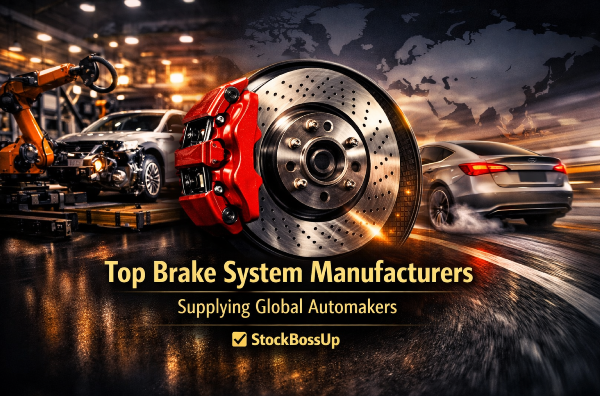
Top Brake System Manufacturers Supplying Global Automakers
Brakes are one of those systems drivers rarely think about until something feels wrong. Yet they are among the most carefully engineered parts of any vehicle.
Every stop, every slowdown, every emergency response depends on a system that has to work instantly and consistently, no matter the conditions.
That level of responsibility is exactly why brake system manufacturing is so concentrated.
Why Brake Systems Are Controlled by Tier 1 Suppliers
Brake systems are not simple assemblies. They are integrated platforms combining hydraulics, electronics, sensors, and mechanical friction materials.
Because of this complexity, automakers rely heavily on Tier 1 suppliers that can deliver complete systems rather than individual parts.
Bosch is one of the most influential players in this space, providing integrated braking and stability systems across global vehicle platforms. Continental plays a similar role, especially where braking intersects with ADAS and electronic stability systems.
ZF Friedrichshafen is deeply embedded in chassis and braking integration for premium vehicle segments. Brembo dominates high-performance and luxury braking systems, where heat management and precision matter most. Akebono remains a key supplier for OEM brake components, particularly in Asian markets.
| Company |
Core Strength |
Market Position |
| Bosch |
Integrated brake systems |
Global Tier 1 leader |
| Continental |
Safety + ADAS integration |
Systems provider |
| ZF Friedrichshafen |
Chassis + braking systems |
Premium OEM supplier |
| Brembo |
High-performance braking |
Luxury + sports vehicles |
| Akebono |
OEM brake components |
Strong Asia OEM presence |
Once a braking system is validated for a platform, replacing it mid-cycle is rare due to safety certification requirements and engineering lock-in.
Why Braking Systems Are Becoming More Electronic
Traditional braking relied purely on hydraulic pressure and mechanical friction. That model is changing quickly.
Modern vehicles now integrate electronic brake control systems that adjust braking force dynamically based on road conditions, driver input, and sensor data.
This shift is especially visible in EVs and hybrids, where regenerative braking handles part of the deceleration process.
Mechanical brakes are still essential, but they are increasingly supported by electronic systems that optimize performance and safety.
A less obvious detail is that some modern braking systems adjust pressure multiple times per second during emergency stops, far beyond what a driver could manually control.
How EVs Are Changing Brake Wear Patterns
Electric vehicles introduce regenerative braking, which uses the motor to slow the car while recovering energy.
This reduces wear on traditional brake pads and rotors during normal driving conditions. However, it does not eliminate mechanical braking. It changes how and when it is used.
Mechanical brakes still serve as the backup system when regenerative braking is insufficient or unavailable.
| Vehicle Type |
Brake Usage Pattern |
System Impact |
| Internal combustion vehicles |
Full mechanical braking |
High wear cycles |
| Hybrid vehicles |
Mixed braking systems |
Reduced mechanical wear |
| EVs |
Regenerative + mechanical backup |
Lower routine wear |
Even with reduced wear, brakes remain a necessary safety system, which keeps aftermarket demand stable over time.
Why Brake Manufacturing Is So Consolidated
Brake systems are safety-critical, which means they require long validation cycles and strict compliance testing.
This naturally limits the number of companies capable of competing at scale.
Engineering expertise, manufacturing precision, and OEM relationships matter more than cost alone.
| Barrier Type |
Impact on Competition |
| Safety certification |
High entry difficulty |
| OEM integration |
Long qualification cycles |
| Engineering complexity |
Limits new entrants |
| Global supply capability |
Requires scale |
A subtle reality in this industry is that once a supplier is selected for a braking platform, it often stays in place for the full lifespan of that vehicle generation.
Where Brake Systems Are Heading Next
Brake systems are gradually becoming more integrated with software and vehicle intelligence systems.
Instead of acting as isolated mechanical components, they are now part of broader stability and driver-assistance ecosystems.
Suppliers that can combine mechanical engineering with software control are becoming more valuable to automakers.
In the end, braking is no longer just about stopping a vehicle. It is about controlling it with precision in real time, across every possible driving condition.












🔑 Key Takeaways
🛑 Brake systems are one of the most safety-critical and tightly regulated automotive components
Brake systems must perform flawlessly under extreme conditions. Because of this, suppliers like Bosch, Continental, ZF Friedrichshafen, Brembo, and Akebono operate under strict engineering and certification standards that limit new competition.
🏭 A small group of Tier 1 suppliers dominates global braking platforms
Brake systems are typically awarded through long OEM contracts. Once a supplier is integrated into a vehicle platform, it often remains in place for the full lifecycle due to safety validation and re-certification costs.
⚡ Electrification is quietly reshaping how braking systems function
EVs and hybrids use regenerative braking, which reduces mechanical brake wear but increases system complexity. This pushes suppliers toward integrated electronic braking systems and software-assisted control.
📦 Aftermarket brake demand remains steady even as vehicle technology evolves
Brake pads and rotors continue to generate predictable replacement cycles. Even with EV adoption, physical braking systems remain essential as a backup safety layer.
Top Brake System Manufacturers Supplying Global Automakers
Brakes are one of those systems drivers rarely think about until something feels wrong. Yet they are among the most carefully engineered parts of any vehicle.
Every stop, every slowdown, every emergency response depends on a system that has to work instantly and consistently, no matter the conditions.
That level of responsibility is exactly why brake system manufacturing is so concentrated.
Why Brake Systems Are Controlled by Tier 1 Suppliers
Brake systems are not simple assemblies. They are integrated platforms combining hydraulics, electronics, sensors, and mechanical friction materials.
Because of this complexity, automakers rely heavily on Tier 1 suppliers that can deliver complete systems rather than individual parts.
Bosch is one of the most influential players in this space, providing integrated braking and stability systems across global vehicle platforms. Continental plays a similar role, especially where braking intersects with ADAS and electronic stability systems.
ZF Friedrichshafen is deeply embedded in chassis and braking integration for premium vehicle segments. Brembo dominates high-performance and luxury braking systems, where heat management and precision matter most. Akebono remains a key supplier for OEM brake components, particularly in Asian markets.
Once a braking system is validated for a platform, replacing it mid-cycle is rare due to safety certification requirements and engineering lock-in.
Why Braking Systems Are Becoming More Electronic
Traditional braking relied purely on hydraulic pressure and mechanical friction. That model is changing quickly.
Modern vehicles now integrate electronic brake control systems that adjust braking force dynamically based on road conditions, driver input, and sensor data.
This shift is especially visible in EVs and hybrids, where regenerative braking handles part of the deceleration process.
Mechanical brakes are still essential, but they are increasingly supported by electronic systems that optimize performance and safety.
A less obvious detail is that some modern braking systems adjust pressure multiple times per second during emergency stops, far beyond what a driver could manually control.
How EVs Are Changing Brake Wear Patterns
Electric vehicles introduce regenerative braking, which uses the motor to slow the car while recovering energy.
This reduces wear on traditional brake pads and rotors during normal driving conditions. However, it does not eliminate mechanical braking. It changes how and when it is used.
Mechanical brakes still serve as the backup system when regenerative braking is insufficient or unavailable.
Even with reduced wear, brakes remain a necessary safety system, which keeps aftermarket demand stable over time.
Why Brake Manufacturing Is So Consolidated
Brake systems are safety-critical, which means they require long validation cycles and strict compliance testing.
This naturally limits the number of companies capable of competing at scale.
Engineering expertise, manufacturing precision, and OEM relationships matter more than cost alone.
A subtle reality in this industry is that once a supplier is selected for a braking platform, it often stays in place for the full lifespan of that vehicle generation.
Where Brake Systems Are Heading Next
Brake systems are gradually becoming more integrated with software and vehicle intelligence systems.
Instead of acting as isolated mechanical components, they are now part of broader stability and driver-assistance ecosystems.
Suppliers that can combine mechanical engineering with software control are becoming more valuable to automakers.
In the end, braking is no longer just about stopping a vehicle. It is about controlling it with precision in real time, across every possible driving condition.