Understanding why consumers choose certain restaurants goes beyond the menu, price, or location. Behavioral economics offers valuable insights into the psychological factors that drive customer decisions in the dining industry. Concepts like brand loyalty, habit loops, perceived value, and consumer psychology play a key role in shaping restaurant revenue and its resilience in competitive markets.
This article dives into how behavioral economics influences dining choices and why some restaurants thrive while others struggle. We’ll explore key drivers, backed by real-world examples and data, to help investors and operators better comprehend consumer behavior.
Brand Loyalty: The Power of Emotional Connection
Brand loyalty occurs when customers repeatedly choose the same restaurant over competitors, even if alternatives may offer lower prices or different menus. This loyalty often stems from emotional connections formed through positive experiences, consistent quality, and alignment with personal values.
Loyal customers tend to overlook minor inconveniences and are less sensitive to price changes. They also act as brand advocates, encouraging friends and family to visit.
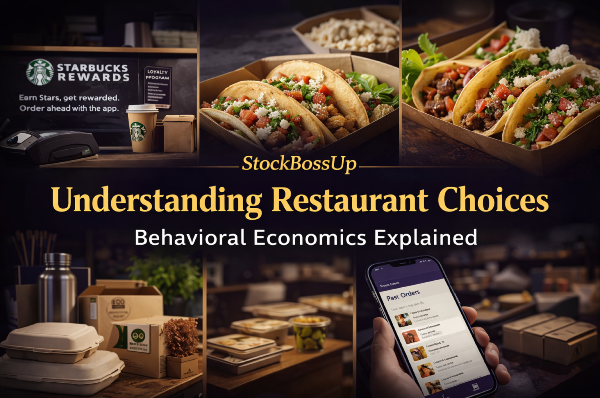
Restaurants invest heavily in building loyalty through rewards programs, personalized marketing, and consistent service delivery. Starbucks (SBUX) is a prime example. Its loyalty app and personalized offers create strong repeat customer behavior, contributing significantly to its revenue stability.
Habit Loops: How Repetition Builds Customer Patterns
Habit loops describe how repeated behaviors become automatic responses to certain cues. In the restaurant context, habit loops form when dining at a particular place becomes part of daily or weekly routines.
For example, a customer might stop at a specific coffee shop each morning on the way to work. The cue (morning commute) triggers the routine (buying coffee), rewarded by the pleasure of the drink.
Restaurants that recognize and reinforce these loops can embed themselves in consumers’ lives, ensuring steady foot traffic and sales.
Studies show that nearly 70% of restaurant visits are driven by habitual behavior, meaning most dining choices are automatic rather than fully conscious decisions.
Perceived Value: More Than Just Price
Perceived value is the customer’s assessment of the benefits of dining at a restaurant compared to the cost. This perception includes tangible aspects like food quality and service, but also intangible factors like ambiance, convenience, and brand prestige.
A restaurant offering perceived high value can command higher prices and maintain customer loyalty even in competitive markets.
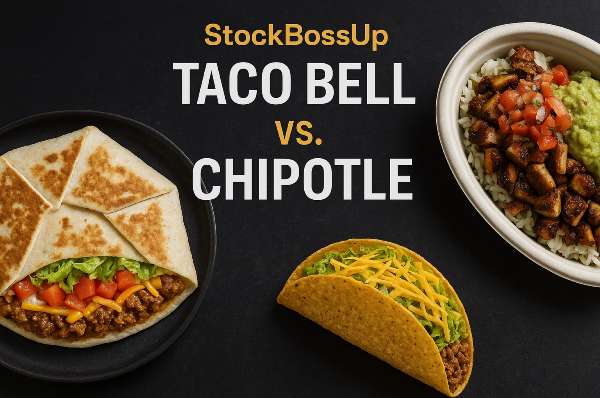
For example, fast-casual chains like Chipotle Mexican Grill (CMG) emphasize fresh ingredients and customization to enhance perceived value, attracting consumers willing to pay a premium.
Consumer Psychology and Revenue Resilience
Consumer psychology helps explain why some restaurants maintain revenue during economic downturns or industry challenges. Psychological factors such as trust, familiarity, and social proof influence decision-making.
Restaurants that build trust through consistent quality and transparent communication tend to retain customers better during crises.
Social proof — where people follow others’ choices — also impacts sales. Positive reviews, social media presence, and word-of-mouth referrals can drive new and repeat business.
| Factor |
Description |
Impact on Revenue Resilience |
| Brand Loyalty |
Emotional connection and repeat visits |
Stable, predictable revenue |
| Habit Loops |
Automatic, cue‑triggered behaviors |
Consistent customer traffic |
| Perceived Value |
Customer’s cost‑benefit assessment |
Ability to command premium pricing |
| Consumer Psychology |
Trust, social proof, familiarity |
Better retention, crisis resilience |
Offering personalized recommendations based on past orders can increase customer spend by up to 20%, leveraging behavioral patterns to boost revenue.
How Brand Loyalty Drives Repeat Business
Brand loyalty is cultivated through consistent delivery of quality and memorable experiences. Loyalty programs reward repeat customers with discounts or perks, reinforcing positive behavior.
Digital apps have amplified loyalty efforts by tracking purchases and offering tailored promotions, increasing engagement and frequency of visits.
Strong brand loyalty also insulates restaurants from competitive pressures, enabling price increases with minimal customer loss.
Habit Loops in Practice: Creating Routine Visits
Habit loops are strengthened by creating convenient cues and rewarding experiences. For example, a fast-food chain might place kiosks near busy intersections, encouraging quick stop-ins.
Seasonal promotions or limited-time offers can serve as new cues, refreshing customer habits and boosting visits.
Understanding customer routines allows restaurants to tailor marketing efforts and store locations to maximize habitual behavior.
Enhancing Perceived Value to Boost Margins
Perceived value can be enhanced through quality ingredients, exceptional service, attractive ambiance, and brand storytelling.
Restaurants that communicate their unique selling points effectively can command higher prices and improve margins.
Adding convenience features like online ordering, delivery, or contactless payment also increases perceived value by satisfying customer preferences.
Psychological Factors Fostering Revenue Stability
Trust builds over time through consistent experiences and transparent business practices. During periods of uncertainty, customers tend to favor familiar, trusted brands.
Social proof, including online ratings and influencer endorsements, drives new customer acquisition and reassures existing patrons.
Restaurants that engage with communities and solicit feedback show responsiveness, further strengthening psychological bonds.
| Strategy |
Behavioral Factor Targeted |
Expected Outcome |
| Loyalty Programs |
Brand Loyalty |
Increased repeat visits |
| Personalized Marketing |
Habit Loops & Perceived Value |
Higher customer spend |
| Quality & Transparency |
Trust and Perceived Value |
Customer retention & price tolerance |
| Social Media Presence |
Social Proof |
New customer attraction |
Role of Technology in Supporting Behavioral Strategies
Technology plays a key role in tracking customer behavior and reinforcing habits. Mobile apps, CRM systems, and data analytics enable restaurants to offer personalized experiences and targeted promotions.
For example, Starbucks’ app uses purchase history to recommend drinks, nudging customers to try new items or upgrade their order.
Digital ordering platforms also simplify repeat purchases, making habitual visits easier.
Challenges in Applying Behavioral Economics
While powerful, behavioral economics requires careful application. Over-reliance on discounts can erode brand value. Misreading customer cues risks alienating loyal patrons.
Restaurants must balance incentives with maintaining quality and authenticity to sustain long-term loyalty.
How Behavioral Economics Influences Investor Perspectives
Investors view strong behavioral economics execution as a sign of a resilient business model. Chains with loyal customer bases, habit-forming offerings, and high perceived value often show more stable revenue and earnings.
For example, companies like Starbucks (SBUX) and Chipotle (CMG) have demonstrated how leveraging behavioral insights leads to consistent growth and strong stock performance.
Conclusion
Behavioral economics explains much of why consumers choose certain restaurants and how these choices translate into revenue resilience. Brand loyalty, habit loops, perceived value, and consumer psychology shape dining decisions in powerful ways.
Restaurants that understand and apply these principles can create lasting customer relationships, maintain stable revenue streams, and gain competitive advantage.
For investors and operators, recognizing the impact of behavioral economics offers a valuable lens to evaluate restaurant performance and growth potential.
📑 The Restaurant Investor’s Knowledge Vault
Master the Market: Navigate through our specialized research silos to uncover high-growth opportunities in the dining and consumer sectors.
🏛️ Authority Hubs
🛠️ Strategic Analysis & Unit Economics
Deep dives into how restaurant brands scale, survive, and outperform the competition.
⚡ Growth, Innovation & Loyalty
Tracking the next generation of industry leaders and tech-driven profitability.
📉 Macro Trends & Operational Margins
Navigating inflation, supply chains, and the seasonal nature of the hospitality business.
🧠 Consumer Trends & Behavior
Understanding the "Why" behind the "Where" when consumers choose to dine.
Tip: Bookmark this page to stay updated on the latest shifts in the restaurant and hospitality investment sector.



Understanding why consumers choose certain restaurants goes beyond the menu, price, or location. Behavioral economics offers valuable insights into the psychological factors that drive customer decisions in the dining industry. Concepts like brand loyalty, habit loops, perceived value, and consumer psychology play a key role in shaping restaurant revenue and its resilience in competitive markets.
This article dives into how behavioral economics influences dining choices and why some restaurants thrive while others struggle. We’ll explore key drivers, backed by real-world examples and data, to help investors and operators better comprehend consumer behavior.
Brand Loyalty: The Power of Emotional Connection
Brand loyalty occurs when customers repeatedly choose the same restaurant over competitors, even if alternatives may offer lower prices or different menus. This loyalty often stems from emotional connections formed through positive experiences, consistent quality, and alignment with personal values.
Loyal customers tend to overlook minor inconveniences and are less sensitive to price changes. They also act as brand advocates, encouraging friends and family to visit.
Restaurants invest heavily in building loyalty through rewards programs, personalized marketing, and consistent service delivery. Starbucks (SBUX) is a prime example. Its loyalty app and personalized offers create strong repeat customer behavior, contributing significantly to its revenue stability.
Habit Loops: How Repetition Builds Customer Patterns
Habit loops describe how repeated behaviors become automatic responses to certain cues. In the restaurant context, habit loops form when dining at a particular place becomes part of daily or weekly routines.
For example, a customer might stop at a specific coffee shop each morning on the way to work. The cue (morning commute) triggers the routine (buying coffee), rewarded by the pleasure of the drink.
Restaurants that recognize and reinforce these loops can embed themselves in consumers’ lives, ensuring steady foot traffic and sales.
Perceived Value: More Than Just Price
Perceived value is the customer’s assessment of the benefits of dining at a restaurant compared to the cost. This perception includes tangible aspects like food quality and service, but also intangible factors like ambiance, convenience, and brand prestige.
A restaurant offering perceived high value can command higher prices and maintain customer loyalty even in competitive markets.
For example, fast-casual chains like Chipotle Mexican Grill (CMG) emphasize fresh ingredients and customization to enhance perceived value, attracting consumers willing to pay a premium.
Consumer Psychology and Revenue Resilience
Consumer psychology helps explain why some restaurants maintain revenue during economic downturns or industry challenges. Psychological factors such as trust, familiarity, and social proof influence decision-making.
Restaurants that build trust through consistent quality and transparent communication tend to retain customers better during crises.
Social proof — where people follow others’ choices — also impacts sales. Positive reviews, social media presence, and word-of-mouth referrals can drive new and repeat business.
How Brand Loyalty Drives Repeat Business
Brand loyalty is cultivated through consistent delivery of quality and memorable experiences. Loyalty programs reward repeat customers with discounts or perks, reinforcing positive behavior.
Digital apps have amplified loyalty efforts by tracking purchases and offering tailored promotions, increasing engagement and frequency of visits.
Strong brand loyalty also insulates restaurants from competitive pressures, enabling price increases with minimal customer loss.
Habit Loops in Practice: Creating Routine Visits
Habit loops are strengthened by creating convenient cues and rewarding experiences. For example, a fast-food chain might place kiosks near busy intersections, encouraging quick stop-ins.
Seasonal promotions or limited-time offers can serve as new cues, refreshing customer habits and boosting visits.
Understanding customer routines allows restaurants to tailor marketing efforts and store locations to maximize habitual behavior.
Enhancing Perceived Value to Boost Margins
Perceived value can be enhanced through quality ingredients, exceptional service, attractive ambiance, and brand storytelling.
Restaurants that communicate their unique selling points effectively can command higher prices and improve margins.
Adding convenience features like online ordering, delivery, or contactless payment also increases perceived value by satisfying customer preferences.
Psychological Factors Fostering Revenue Stability Trust builds over time through consistent experiences and transparent business practices. During periods of uncertainty, customers tend to favor familiar, trusted brands.
Social proof, including online ratings and influencer endorsements, drives new customer acquisition and reassures existing patrons.
Restaurants that engage with communities and solicit feedback show responsiveness, further strengthening psychological bonds.
Role of Technology in Supporting Behavioral Strategies
Technology plays a key role in tracking customer behavior and reinforcing habits. Mobile apps, CRM systems, and data analytics enable restaurants to offer personalized experiences and targeted promotions.
For example, Starbucks’ app uses purchase history to recommend drinks, nudging customers to try new items or upgrade their order.
Digital ordering platforms also simplify repeat purchases, making habitual visits easier.
Challenges in Applying Behavioral Economics
While powerful, behavioral economics requires careful application. Over-reliance on discounts can erode brand value. Misreading customer cues risks alienating loyal patrons.
Restaurants must balance incentives with maintaining quality and authenticity to sustain long-term loyalty.
How Behavioral Economics Influences Investor Perspectives Investors view strong behavioral economics execution as a sign of a resilient business model. Chains with loyal customer bases, habit-forming offerings, and high perceived value often show more stable revenue and earnings.
For example, companies like Starbucks (SBUX) and Chipotle (CMG) have demonstrated how leveraging behavioral insights leads to consistent growth and strong stock performance.
Conclusion
Behavioral economics explains much of why consumers choose certain restaurants and how these choices translate into revenue resilience. Brand loyalty, habit loops, perceived value, and consumer psychology shape dining decisions in powerful ways.
Restaurants that understand and apply these principles can create lasting customer relationships, maintain stable revenue streams, and gain competitive advantage.
For investors and operators, recognizing the impact of behavioral economics offers a valuable lens to evaluate restaurant performance and growth potential.
📑 The Restaurant Investor’s Knowledge Vault
🏛️ Authority Hubs
🛠️ Strategic Analysis & Unit Economics
Deep dives into how restaurant brands scale, survive, and outperform the competition.
⚡ Growth, Innovation & Loyalty
Tracking the next generation of industry leaders and tech-driven profitability.
📉 Macro Trends & Operational Margins
Navigating inflation, supply chains, and the seasonal nature of the hospitality business.
🧠 Consumer Trends & Behavior
Understanding the "Why" behind the "Where" when consumers choose to dine.
Tip: Bookmark this page to stay updated on the latest shifts in the restaurant and hospitality investment sector.