Key Takeaways
💻 Digital transformation is redefining competitive advantage in specialty retail
Retailers that integrate data, automation, and omnichannel systems are pulling ahead of traditional operators.
⚙️ Leaders are using AI, mobile apps, and supply chain tech to improve efficiency
These tools reduce costs, improve inventory accuracy, and increase customer engagement.
📊 Auto parts, home improvement, and beauty retailers lead digital adoption
These categories benefit most from real-time inventory systems and loyalty-driven platforms.
📈 Digital leaders are widening the earnings and valuation gap
Stronger execution is translating into higher margins, better cash flow, and premium market valuations.
Companies Leading Digital Transformation in Specialty Retail
Why digital transformation defines winners in specialty retail
Companies leading digital transformation in specialty retail are reshaping how the entire industry competes. Retail is no longer just about store locations and product assortment. It is now driven by data systems, automation, and integrated customer experiences.
Specialty retail companies operate in categories like auto parts, beauty, home improvement, electronics, and general merchandise. These businesses rely heavily on inventory accuracy, customer retention, and efficient logistics. Digital systems directly improve all three.
The result is a widening performance gap. Companies that invest early in digital infrastructure are compounding advantages in efficiency and customer loyalty.
Auto parts retailers: digital leaders in inventory precision
Auto parts retailers are among the most advanced in digital transformation due to the complexity of managing millions of SKUs across dense store networks. Companies like AutoZone and O'Reilly Automotive are leaders in this space.
Their systems rely heavily on real-time inventory tracking and predictive demand modeling. This ensures that critical parts are available at the right location when customers need them.
This digital precision reduces stockouts and improves same-day fulfillment rates. It also increases store productivity without requiring significant increases in labor costs.
A key advantage is network density. Stores function as micro-distribution hubs, allowing digital orders to be fulfilled locally and quickly.
Over time, this improves both revenue stability and operating margins.
Home improvement retailers: building fully integrated ecosystems
Home improvement retailers have invested heavily in digital transformation to connect online platforms with massive physical store networks. Companies like Home Depot have built highly integrated systems that support both DIY customers and professional contractors.
Customers can check inventory online, reserve products, and pick them up in-store or schedule delivery. This reduces friction and increases conversion rates.
Digital tools also support complex project planning for contractors, which increases average transaction size. These systems improve customer retention and engagement.
Lowe's has also focused on mobile apps and real-time inventory systems that connect customers directly to store availability.
A less visible benefit is supply chain optimization. Digital tracking improves distribution efficiency and reduces delays across large geographic regions.
Beauty retail: personalization-driven digital transformation
Beauty retail has embraced digital transformation through personalization, loyalty systems, and mobile engagement. Companies like Ulta Beauty use data-driven platforms to connect customer preferences with targeted marketing.
These systems analyze purchase history, browsing behavior, and loyalty activity to recommend products more effectively. This increases conversion rates and basket size.
Mobile apps play a central role in customer engagement. They allow users to track rewards, receive personalized offers, and shop seamlessly across channels.
Digital transformation also supports in-store experiences. Employees can access customer profiles to provide more tailored recommendations and services.
A subtle advantage is improved inventory planning based on loyalty data trends, which reduces waste and improves profitability.
Electronics retail: survival through digital reinvention
Electronics retail has faced some of the strongest pressure from e-commerce, making digital transformation essential for survival. Companies like Best Buy have successfully adapted by combining digital convenience with in-store services.
Customers often research online but prefer in-person demonstrations for high-value products. Digital systems help bridge this gap by integrating online browsing with in-store support.
Best Buy has also expanded services like installation, technical support, and protection plans. These higher-margin offerings are enabled through digital customer tracking and scheduling systems.
Inventory management has also improved significantly. Fast-moving technology products require precise forecasting to avoid overstock and obsolescence.
Digital transformation has allowed electronics retailers to stabilize margins despite intense price competition.
Why digital leaders outperform across financial metrics
Companies leading digital transformation in specialty retail tend to outperform across revenue growth, margins, and cash flow generation. This is not just a technology advantage—it is an operational advantage.
Digital systems reduce inventory waste, improve pricing accuracy, and increase conversion rates. These improvements directly impact profitability.
Better customer data also leads to more effective marketing. Retailers can target promotions more precisely, reducing unnecessary discounting.
Over time, these efficiencies compound. Companies become more scalable and less reliant on physical expansion for growth.
This results in stronger free cash flow and more resilient earnings profiles.
Long-term outlook: digital transformation as a widening moat
Digital transformation is becoming a defining moat in specialty retail. Companies that invest early in integrated systems are building advantages that are difficult to replicate.
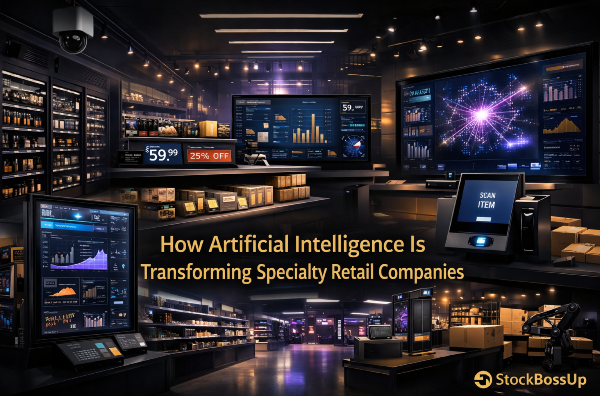
AI and automation are accelerating this trend. Retailers with large data sets can improve forecasting, personalization, and logistics faster than smaller competitors.
As a result, the industry is becoming more concentrated. Leading companies are taking share from less digitally advanced rivals.
This trend is likely to continue as consumer expectations for speed, accuracy, and personalization increase.
Ultimately, digital transformation is not just improving retail operations—it is redefining which companies will lead the next decade of specialty retail growth.




















Key Takeaways
💻 Digital transformation is redefining competitive advantage in specialty retail
Retailers that integrate data, automation, and omnichannel systems are pulling ahead of traditional operators.⚙️ Leaders are using AI, mobile apps, and supply chain tech to improve efficiency
These tools reduce costs, improve inventory accuracy, and increase customer engagement.📊 Auto parts, home improvement, and beauty retailers lead digital adoption
These categories benefit most from real-time inventory systems and loyalty-driven platforms.📈 Digital leaders are widening the earnings and valuation gap
Stronger execution is translating into higher margins, better cash flow, and premium market valuations.Companies Leading Digital Transformation in Specialty Retail
Why digital transformation defines winners in specialty retail
Companies leading digital transformation in specialty retail are reshaping how the entire industry competes. Retail is no longer just about store locations and product assortment. It is now driven by data systems, automation, and integrated customer experiences.
Specialty retail companies operate in categories like auto parts, beauty, home improvement, electronics, and general merchandise. These businesses rely heavily on inventory accuracy, customer retention, and efficient logistics. Digital systems directly improve all three.
The result is a widening performance gap. Companies that invest early in digital infrastructure are compounding advantages in efficiency and customer loyalty.
Auto parts retailers: digital leaders in inventory precision
Auto parts retailers are among the most advanced in digital transformation due to the complexity of managing millions of SKUs across dense store networks. Companies like AutoZone and O'Reilly Automotive are leaders in this space.
Their systems rely heavily on real-time inventory tracking and predictive demand modeling. This ensures that critical parts are available at the right location when customers need them.
This digital precision reduces stockouts and improves same-day fulfillment rates. It also increases store productivity without requiring significant increases in labor costs.
A key advantage is network density. Stores function as micro-distribution hubs, allowing digital orders to be fulfilled locally and quickly.
Over time, this improves both revenue stability and operating margins.
Home improvement retailers: building fully integrated ecosystems
Home improvement retailers have invested heavily in digital transformation to connect online platforms with massive physical store networks. Companies like Home Depot have built highly integrated systems that support both DIY customers and professional contractors.
Customers can check inventory online, reserve products, and pick them up in-store or schedule delivery. This reduces friction and increases conversion rates.
Digital tools also support complex project planning for contractors, which increases average transaction size. These systems improve customer retention and engagement.
Lowe's has also focused on mobile apps and real-time inventory systems that connect customers directly to store availability.
A less visible benefit is supply chain optimization. Digital tracking improves distribution efficiency and reduces delays across large geographic regions.
Beauty retail: personalization-driven digital transformation
Beauty retail has embraced digital transformation through personalization, loyalty systems, and mobile engagement. Companies like Ulta Beauty use data-driven platforms to connect customer preferences with targeted marketing.
These systems analyze purchase history, browsing behavior, and loyalty activity to recommend products more effectively. This increases conversion rates and basket size.
Mobile apps play a central role in customer engagement. They allow users to track rewards, receive personalized offers, and shop seamlessly across channels.
Digital transformation also supports in-store experiences. Employees can access customer profiles to provide more tailored recommendations and services.
A subtle advantage is improved inventory planning based on loyalty data trends, which reduces waste and improves profitability.
Electronics retail: survival through digital reinvention
Electronics retail has faced some of the strongest pressure from e-commerce, making digital transformation essential for survival. Companies like Best Buy have successfully adapted by combining digital convenience with in-store services.
Customers often research online but prefer in-person demonstrations for high-value products. Digital systems help bridge this gap by integrating online browsing with in-store support.
Best Buy has also expanded services like installation, technical support, and protection plans. These higher-margin offerings are enabled through digital customer tracking and scheduling systems.
Inventory management has also improved significantly. Fast-moving technology products require precise forecasting to avoid overstock and obsolescence.
Digital transformation has allowed electronics retailers to stabilize margins despite intense price competition.
Why digital leaders outperform across financial metrics
Companies leading digital transformation in specialty retail tend to outperform across revenue growth, margins, and cash flow generation. This is not just a technology advantage—it is an operational advantage.
Digital systems reduce inventory waste, improve pricing accuracy, and increase conversion rates. These improvements directly impact profitability.
Better customer data also leads to more effective marketing. Retailers can target promotions more precisely, reducing unnecessary discounting.
Over time, these efficiencies compound. Companies become more scalable and less reliant on physical expansion for growth.
This results in stronger free cash flow and more resilient earnings profiles.
Long-term outlook: digital transformation as a widening moat
Digital transformation is becoming a defining moat in specialty retail. Companies that invest early in integrated systems are building advantages that are difficult to replicate.
AI and automation are accelerating this trend. Retailers with large data sets can improve forecasting, personalization, and logistics faster than smaller competitors.
As a result, the industry is becoming more concentrated. Leading companies are taking share from less digitally advanced rivals.
This trend is likely to continue as consumer expectations for speed, accuracy, and personalization increase.
Ultimately, digital transformation is not just improving retail operations—it is redefining which companies will lead the next decade of specialty retail growth.